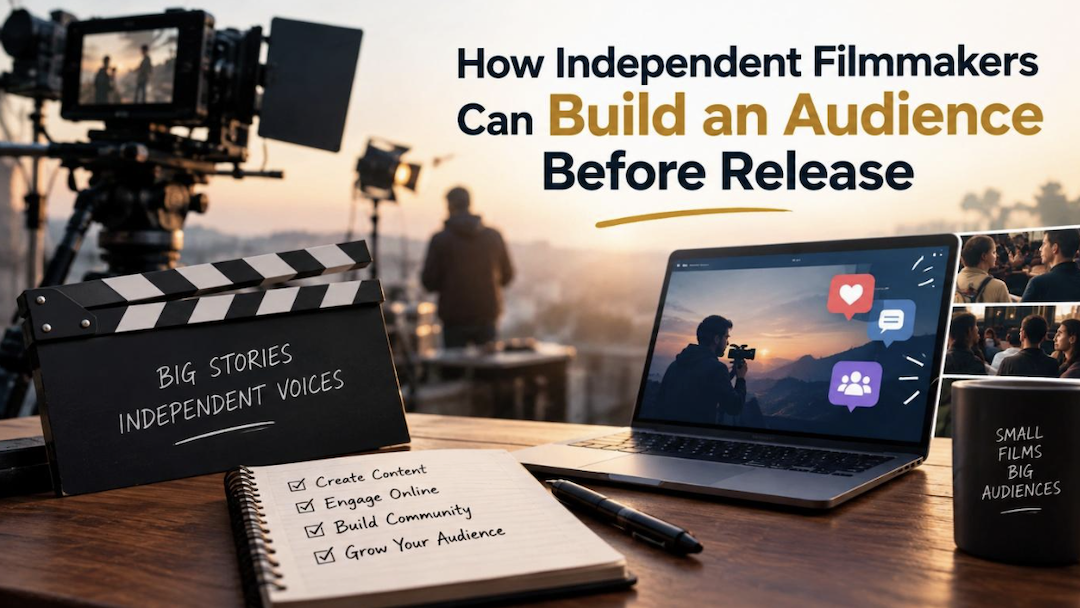
Introduction: Why Audience-Building Should Start Before the Film Release
For independent filmmakers, making a good movie is only half of the struggle since getting an audience can also be tough if there is not enough funding for advertising and distribution of the movie. Contrary to big movie studios, independent filmmakers do not usually have a big team for promotion or celebrities to endorse their films, and therefore, the creation of audience from the beginning of filmmaking is critical. Filmmakers can promote their film before its release and even during production time.
Creating an audience helps to increase the recognition of the film, the plot, and the filmmaker. Communication with future spectators allows them to follow the work on the project and emotionally engage into it. In addition, feedback can be obtained regarding the promotion material, themes and preferences of the future audience. Social media, filmmaking forums, film festivals, mailing lists, and personal contacts can all help to create an audience from the very beginning.
The most important thing here is that it gives filmmakers some momentum to start from once the film is released. The growing importance of digital distribution also gives independent filmmakers new opportunities to reach audiences beyond traditional theatrical promotion. According to Consegic Business Intelligence, the global Over-the-Top (OTT) Devices and Services Market is projected to grow from USD 327.39 billion in 2025 to USD 1,452.58 billion by 2035, reflecting a CAGR of 16.07%, highlighting the expanding role of streaming and on-demand platforms in connecting content with viewers.
Using Social Media to Create Early Awareness and Interest
Social media can be a cost-effective tool that will allow independent filmmakers to market their film in advance of its release without spending much on marketing. Filmmakers may use Instagram, YouTube, TikTok, Facebook, and X social networks to gain followers of the film before the actual release.
Filmmakers can create content not only after posting trailers in the days preceding the release but also during the whole process of making the movie. Short videos, character presentations, images from the shooting process, location shots, teasers, posters, or even director comments on certain scenes can keep people interested in the film’s development.
However, it is better to avoid sharing information about plot points of the film that could spoil someone’s future experience of watching the film. Filmmakers can show how a certain scene was created or introduce some actors or directors of the movie.
Consistency is more important than too frequent posting. A simple content schedule may be used to communicate with the followers of the film. It may also include hashtags, collaborations with influencers, and interaction with the target audience.
Using social media allows filmmakers to learn their audience. Filmmakers may get feedback through comments, shares, views, etc.
Building a Community Through Behind-the-Scenes Content
Behind-the-scenes footage can help people feel involved in independent films before they even see the movies. Apart from being interested in what will be on the screen, people are also keen to learn about the process of creating a film. Independent filmmakers can take advantage of this interest and create a community for their projects.
Filmmakers can upload rehearsal footage, costumes preparation, set construction, cinematography experimentation, editing process, interviews with cast members, and funny scenes from the shooting. Such content will give people the opportunity to get a glimpse of how much effort goes into making a movie. It can make the project more personal and more authentic compared to large studio productions with polished marketing campaigns.
The main thing here is to make behind-the-scenes footage entertaining rather than just show the process of making a film without any explanations and fun moments.
Filmmakers can ask people to participate in polls, answer some questions, compete in something related to the movie, or discuss the film itself. The audience will feel involved and will want to be part of the filmmaking process. Eventually, all those interactions will turn casual followers into a real fanbase.
Leveraging Film Festivals, Collaborations, and Online Communities
By establishing relations with communities that are interested in cinema, independent filmmakers can increase their pre-release audience. In particular, film festivals offer the opportunity to present a film, meet representatives of the industry and find an audience interested in independent films. Even without an official release of a film, festival appearance will give some credibility and create positive word-of-mouth promotion.
Online communities of independent filmmakers also can be helpful to reach out to potential audiences. Various platforms or forums for independent filmmakers, screenwriters, cinematographers, or for certain genres of films are a good way to contact with an audience interested in one’s work. Nevertheless, promotional efforts should be authentic and not look like repetitive advertising.
Collaborations can help filmmakers to introduce a film to new audiences. Independent filmmakers can collaborate with actors, photographers, musicians, critics, film creators or social media celebrities whose audiences are the same as that of filmmakers. Thus, for instance, a filmmaker working on a documentary about environmental problems can collaborate with environmentalists or creators.
These collaborations can help boost visibility by cutting down reliance on paid advertisements. What is even more important is that recommendations from the trusted community and influencers are more credible compared to traditional marketing messages.
Turning Early Supporters into Advocates for Your Film
The first fans of an independent film-maker could be the most effective means of promotion of his film. Rather than treating such people just as the audience, independent film-makers need to build up relations that would inspire them to actively promote and distribute the movie.
One of the possible ways to do so would be to provide them with the exclusivity. Providing them with the exclusive screening of the movie or of some parts of its production process or with digital movie posters and/or the early news about the film would make these people feel closer to the film.
Independent film-makers should facilitate the process of information spread by their audience. For instance, providing clear information about the film’s release date, interesting posters, short movies or other materials for social networks could be helpful.
The independent film-maker should not ignore the feedback from this community after the movie’s release but rather respond to it. Thus, this community could turn out to be not only the basis of the current film but also the audience of the future movies of the independent film-maker.
Conclusion
Creating an audience for an independent film prior to its release can be crucial for getting attention and connecting with audiences. This is especially important for independent filmmakers that may not have much of a budget for marketing their films. In addition, it can be relatively inexpensive to promote the film using social media, behind-the-scenes footage, film festivals, communities online, and collaborations. However, it is even more important because these methods will allow the filmmaker to connect with the potential audience on a personal level and make them feel a part of the process. Ultimately, such people can become advocates for the film who will help it reach even more people.
Aditi Jaiswal is a content writer at Consegic Business Intelligence a strong foundation in creating meaningful and engaging content. She explores topics across technology, digital ecosystems, and emerging trends, bringing clarity and depth to every piece she writes. Her content focuses on a sharp perspective and research-oriented approach, delivering content that not only informs but also sparks curiosity and conversation in an ever-evolving digital world.
Related