
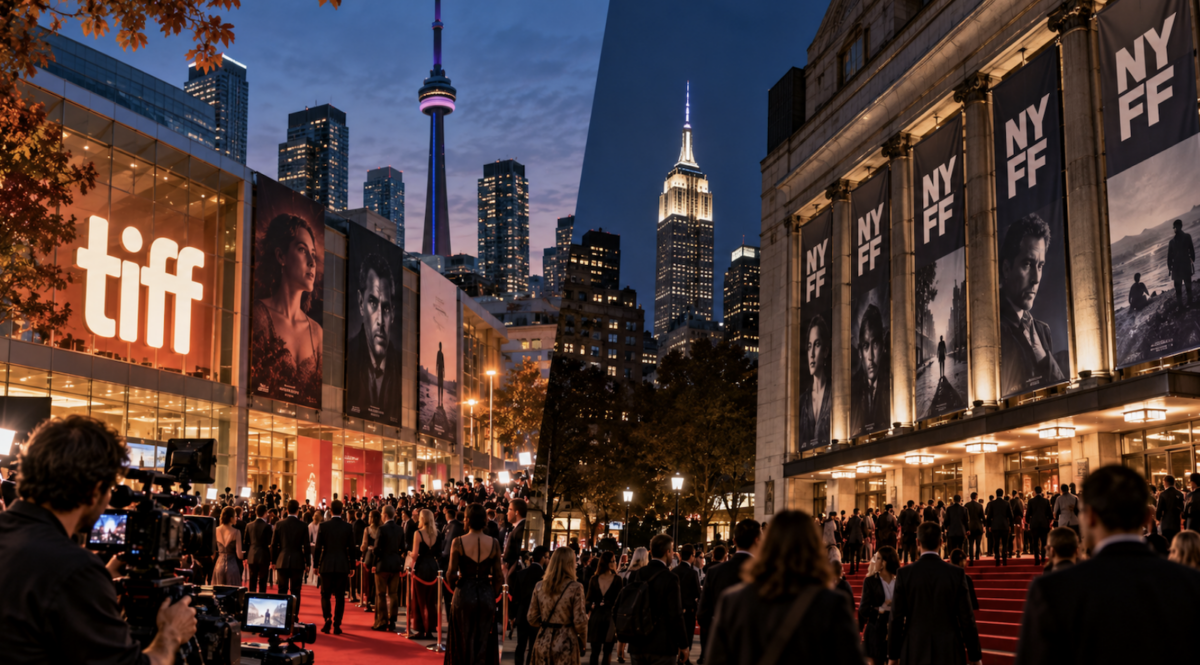
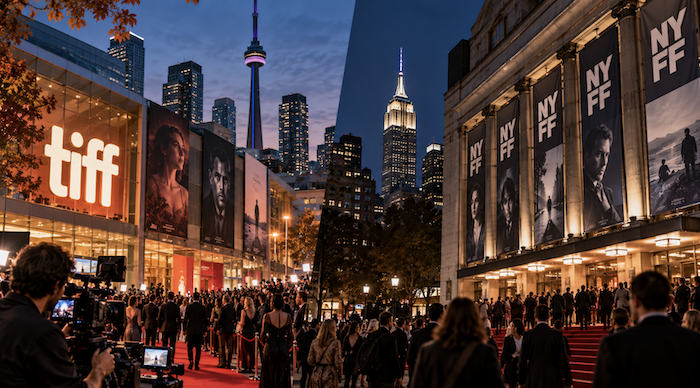
The 2026 fall film season has entered one of its busiest stretches. The Toronto International Film Festival opened on September 10 with nearly 300 films on its program, while the New York Film Festival will begin on September 25 and continue into October. Together, the two events give independent filmmakers access to critics, audiences, programmers and distributors at a point when the film business faces major questions about theatrical attendance, financing and discovery. Toronto has placed particular attention on independent and international work this year as it tries to connect with younger viewers.
That effort also reflects the way people divide their leisure time in 2026. Film no longer competes only with television. Viewers switch between streaming, social platforms, podcasts and online games throughout the week. Services such as incaspin belong to the adult online gaming segment, where users access casino-style games through digital interfaces, while searches for the best online сasino represent another part of that activity. Independent filmmakers face a different challenge within the same crowded entertainment environment: they need to persuade people to give a feature film their sustained attention.
Toronto and New York can help them do that. A strong festival screening still creates something that an algorithm cannot guarantee: hundreds of people watching the same work at the same time, followed by immediate discussion.
In 2026, that role feels especially important.
Toronto Is Putting Independent Cinema at the Center
Toronto has traditionally mixed large premieres with smaller productions, documentaries and international titles. This year’s program strengthens the independent side of that formula.
The festival runs from September 10 through September 20. Organizers have spoken openly about younger audiences and their interest in films outside conventional studio production. Chief programming officer Anita Lee told Reuters that younger moviegoers increasingly seek international stories and work that sits outside mainstream Hollywood.
That approach gives the 2026 edition a clear identity.
The program includes political documentaries, personal dramas, genre pictures, biographies and work from filmmakers across many countries. Some titles arrive after screenings at Venice or Telluride. Others make their first major public appearance in Toronto.
That combination matters because festivals perform several jobs at once.
They introduce new films, but they also test audience response. A quiet title can arrive without major expectations and leave with strong word of mouth. A heavily discussed premiere can encounter a more complicated reaction once viewers actually see it.
Toronto’s large public audience makes those reactions particularly useful.
Documentaries Are Taking on Immediate Subjects
Several documentaries at Toronto deal directly with current political and social questions.
Rescue, directed by Sine Plambech, examines the Mediterranean migrant crisis. Tehran, Under the Skin, from Afsaneh Salari, looks at Iran through the country’s beauty industry. Toronto also programmed a documentary about Elon Musk for its North American premiere.
These films illustrate an important role for independent nonfiction cinema.
News reports often need to explain an event quickly. A documentary can spend much more time with individuals, institutions and consequences. The filmmaker can follow people for months or years and structure the material around experiences that short reports cannot fully explore.
Festivals give that work a public starting point.
The screening itself may attract press attention, but conversations after the film can matter just as much. Directors answer questions, participants discuss their experiences, and viewers carry those conversations beyond the theater.
That social function remains one reason documentary filmmakers continue to value physical festivals even as digital distribution expands.
Personal Stories Are Carrying Political History
Toronto opened its 51st edition with Being Heumann, a drama about disability rights activist Judy Heumann. Ruth Madeley plays Heumann, while the story focuses on the fight for disability rights in the United States and the 1977 Section 504 protest.
The choice tells us something about this year’s festival priorities.
A historical drama can connect large political events with individual experiences. Rather than treating disability rights only as policy history, the film places activists and their daily lives at the center.
That approach also creates room for discussions about casting and representation.
Films about historical movements often face a basic challenge: they need to explain enough context for viewers who do not know the history without turning characters into illustrations for a political lesson.
Festival audiences tend to notice that balance.
Toronto’s opening slot guarantees attention, but the movie still has to work as a drama after the speeches and red carpet end.
Genre Films Still Matter to the Independent Sector
The fall festival circuit does not consist entirely of serious historical dramas and political documentaries.
Horror, thrillers, comedies and unusual hybrids continue to occupy significant space.
That matters for independent filmmaking because genre stories can reach audiences without enormous production budgets. A filmmaker can build tension through writing, editing, sound and performance rather than expensive spectacle.
Horror provides an obvious example.
Independent horror has maintained a strong festival presence because viewers often respond collectively to it. A packed theater can quickly show whether suspense works, whether humor lands and whether an ending creates discussion.
Toronto’s 2026 program continues to make room for that kind of work alongside awards-oriented dramas.
The distinction between “festival film” and “audience film” therefore looks less useful than it once did. Many independent productions need both critical attention and an engaged public.
Toronto Gives New Work an Immediate Test
A festival screening produces several kinds of feedback at once.
Filmmakers can observe how viewers respond. Critics publish early reviews. Sales representatives watch interest from distributors. Programmers from other festivals may consider future screenings.
For an independent production, these reactions can affect what happens next.
Several factors usually matter after a premiere:
- audience response during and after screenings;
- critical reviews and festival coverage;
- interest from distributors;
- invitations from other festivals;
- potential awards attention;
- the clarity of the film’s intended audience.
None guarantees commercial success.
Still, together they help establish how the industry understands a title before wider distribution.
Toronto can create that initial conversation. New York often continues it while introducing another group of films.
New York Takes a More Curated Approach
The 64th New York Film Festival runs from September 25 through October 12.
Its Main Slate contains 34 films from 31 countries. Seventeen directors will make their Main Slate debuts, while the program includes four world premieres, nine North American premieres and 12 U.S. premieres.
Those numbers show the international scope of the program without turning the festival into an enormous catalog.
New York’s approach relies heavily on selection.
The Main Slate brings established directors into the same program as filmmakers appearing in the section for the first time. That structure lets audiences move between familiar names and work they may know little about.
The festival also has Currents, a section that focuses on formally adventurous cinema. In 2026, Currents includes 15 feature films and 28 shorts representing 24 countries and regions. Five of the features will have world premieres.
For independent filmmakers who work outside conventional narrative structures, that section holds particular significance.
A World Premiere Can Still Create an Event
New York has reserved its Centerpiece position for Behemoth!, which will have its world premiere on October 2.
The drama follows Alex, a cellist who leaves an orchestra in Chicago and returns to Los Angeles, where he records film scores while dealing with family and personal problems. The festival lists the film at 124 minutes.
Its Centerpiece status illustrates how festivals can still create a specific cultural moment around a movie.
The public has grown accustomed to immediate digital access. New films can appear on streaming platforms with little ceremony. A world premiere operates differently.
Audiences know that few people have seen the film. Cast and filmmakers can attend. Critics publish their first reactions within hours. That concentration of attention gives the screening a clear place in the calendar.
Independent productions cannot reproduce that effect through ordinary digital availability alone.
New York’s Main Slate Looks Beyond One National Industry
The 2026 Main Slate includes work from filmmakers connected to cinema across Europe, Asia, Africa and the Americas.
Titles include All of a Sudden, Bitter Christmas, Clarissa, Dao, Fatherland, La Gradiva, The Man I Love, Possible Love and Rose. The program also includes documentaries and fiction from both established and emerging directors.
This international structure matters because the fall festival season can otherwise become too focused on American awards campaigns.
Independent cinema works across national borders throughout the year.
A director may finance a project through several countries, premiere at a European festival, screen in Toronto and then reach American audiences through New York. That path creates multiple entry points for critics and distributors.
The festival calendar therefore acts less like a sequence of isolated events and more like a series of public screenings that gradually build a film’s identity.
Some Films Will Travel Between Major Festivals
Toronto and New York do not operate in isolation.
Films move through Cannes, Venice, Telluride, Toronto, New York and many smaller events. A title may arrive in Canada with reviews already available from Europe. Another may save its world premiere for New York.
This creates different conditions for each screening.
A world premiere generates first reactions.
A later festival appearance tests whether early enthusiasm continues with another audience.
For filmmakers, both situations can carry value.
A production does not need to “win” the festival circuit. It needs to find viewers, build critical understanding and establish a path toward its next stage.
That stage might involve theatrical distribution, another festival, an awards campaign or eventual home viewing.
The Currents Section Shows Another Side of Independent Film
The New York Film Festival’s Currents program deserves attention because it demonstrates how broad the term “independent cinema” has become.
Some independent films follow familiar narrative structures with recognizable actors. Others question basic assumptions about duration, editing, performance and storytelling.
Currents concentrates on the latter group.
The 2026 program includes feature-length work as well as six short-film programs. Organizers describe the section as a space for filmmakers who challenge standardized cinematic form.
Short films matter here.
Commercial theaters rarely devote much space to them, yet shorts allow directors to experiment without carrying the financial requirements of a feature. They also give emerging filmmakers a practical way to reach programmers and critics.
Festival sections dedicated to shorts keep that route open.
Restoration Also Belongs to the Fall Conversation
New York’s 2026 program does not focus only on new productions.
Its Revivals section includes 12 features and two programs of rare short films. The selections feature restored, preserved and digitally remastered work.
At first, restoration might seem separate from a discussion about independent films shaping the current season.
It actually adds useful context.
New directors do not work without film history. Festivals can place contemporary experimentation next to older works that once challenged their own period’s production or censorship rules.
Restoration also raises practical questions about preservation.
Independent films often face greater archival risks because smaller rights holders and production companies may lack long-term resources. A restoration can return a neglected film to public circulation decades later.
That gives festivals another role beyond discovery. They can also keep existing cinema available.
Younger Audiences Could Change Festival Strategy
Toronto’s interest in younger viewers deserves close attention.
People in their twenties have grown up with instant access to enormous libraries of entertainment. They can move from a short video to a two-hour movie without leaving the same device.
Yet younger audiences have also shown interest in physical cultural events.
Film festivals can use that behavior.
A screening offers a fixed time, a theater, an audience and often a discussion with the creative team. Those elements turn viewing into an event rather than another item in a digital catalog.
Independent cinema may benefit from that distinction.
A small film can disappear quickly when it sits beside thousands of titles on a platform. In a festival program, programmers give it context and a scheduled place.
The audience still decides whether it works.
But at least people know it exists.
Independent Film Needs Discovery More Than Volume
The 2026 fall season contains hundreds of titles.
That creates abundance, but abundance does not automatically create attention.
For independent filmmakers, discovery remains the central problem. Producing a film represents only one stage. The work must then reach people who might care about it.
Toronto addresses that problem through scale and public participation. New York uses a smaller, highly selected program and specialized sections.
Both models can serve filmmakers.
Toronto can generate broad audience reaction. New York can place a title within a tightly programmed international context.
Neither festival can determine the future of independent cinema by itself. Together, however, they show how festivals continue to connect films with viewers in an entertainment market that constantly competes for attention.
What the 2026 Season Is Showing So Far
Toronto has not finished yet, and New York has not started. Any attempt to declare the defining film of the season would therefore come too early.
Still, several patterns have already emerged.
Documentaries continue to address current political and social subjects directly. Historical dramas connect public movements with individual lives. Genre filmmakers remain active within independent production. International directors continue to move between major festivals, while experimental work retains dedicated programming space.
Most importantly, festivals still matter as places of discovery.
The technology around filmmaking and distribution continues to change, but independent directors face a familiar problem: they need people to watch their work.
Toronto gives hundreds of films access to a large public audience. New York follows with an international Main Slate, world premieres, experimental sections and restored cinema.
From September into October, the conversation will move from one city to the other.
Some titles will gain distribution. Others will collect reviews or continue through additional festivals. A few may enter awards discussions. Many will simply find an audience that had never heard of them before.
For independent film, that last result still matters. The 2026 fall festival season shows that discovery does not depend only on algorithms, advertising budgets or recognizable names. A dark theater, a scheduled screening and an audience willing to watch something unfamiliar can still give a film its first meaningful public life.