
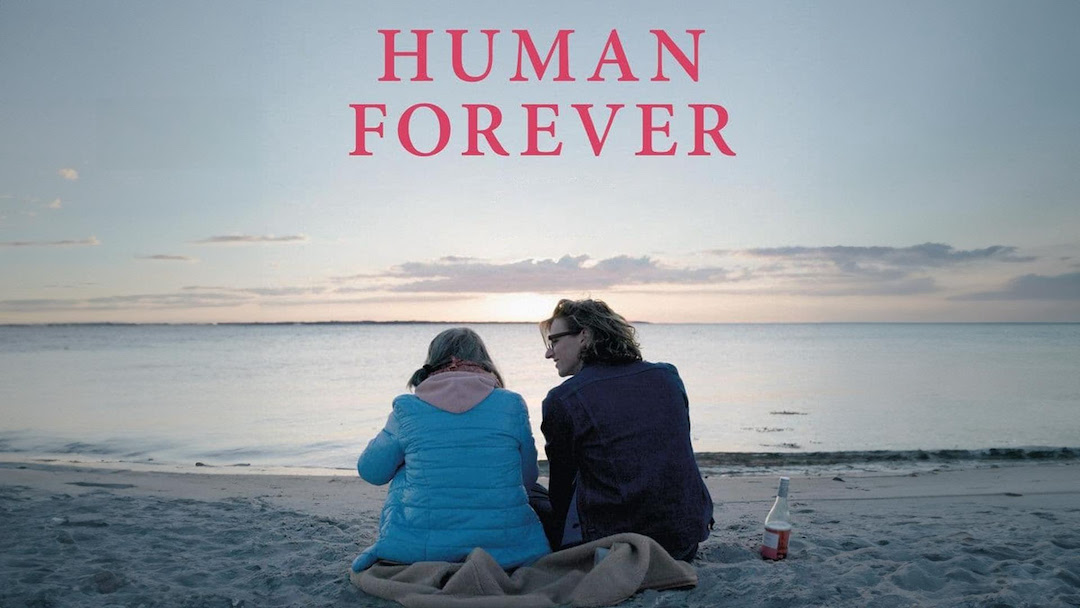
“It wasn’t the diagnosis or the condition itself that was the worst part, but how society treated them afterwards.”
This harsh yet hopeful realisation is the driving force behind Human Forever, a cinematic event that has transformed from a groundbreaking documentary into a global movement. Spanning screenings for world leaders and adoption by over 43 universities worldwide, the film challenges us to shift our mindset from managing an illness to preserving human connection.
In this exclusive Q&A, the filmmaker pulls back the curtain on the creative choices that turned this documentary into a box office sensation, what real-world “impact” actually looks like on the ground, and what we can expect from the highly anticipated sequel, There Is No Society.
How do you strike the delicate balance between showing the raw, challenging reality of dementia and maintaining enough “accessibility” so that the audience remains engaged rather than overwhelmed?
The main aim of Human Forever was to put a more nuanced story on this theme to the world stage, because that was precisely what I felt was missing. During years of research, I saw nothing but stories that focused on loss and what people could no longer do. Conversely, the people I spoke to told me that it wasn’t the diagnosis or the condition itself that was the worst part, but how society treated them afterwards.
I found that to be a harsh yet hopeful conclusion, because it meant that the onus is on us as a society, to change. The only way to get people thinking about this was through a very human and personal approach to the subject, where we don’t focus on the illness or the patient, but on seeing the person behind it. That is what moves people, gives them hope, and keeps audiences engaged.
What specific creative choices did you make to ensure Human Forever transitioned from a standard documentary into a record-breaking “human interest” cinematic event?
Right from the very start, I told Teun (the film’s protagonist) that we had to make dementia ‘sexy’ – by which I don’t mean the condition itself, but rather how we approach the subject. That was the biggest challenge, in fact; everyone told me, to not even go near dementia as a subject because ‘nobody wants to see it’ and that everyone’s so afraid of it.
That’s precisely why I decided to tell the story through the eyes of a young boy who’s worried about the future and sets out in search of hopeful answers. I made the documentary cinematic, paying a great deal of attention to the composition of the score. The film almost feels like a Hollywood-style fiction film. I don’t like being pigeonholed myself, and I certainly don’t believe in doing the same to films.
To build this feeling of an ‘event’, we needed to build a broad audience base at an earlier stage, allowing us to garner interest and engagement before the film was even released. At the time of the films original theatrical release in the Netherlands, we were slotted in between Barbie and Oppenheimer – not exactly minor films – but thanks to the way the documentary grew organically and generated strong word of mouth, Human Forever remained at the top of box office for weeks on end.
The film has been screened for governments and at the G20 summit. When you are in a room with policymakers like Mark Rutte, what is the primary “call to action” you hope they take away from the film that they wouldn’t get from a standard policy briefing?
We need to have a more honest conversation about what a good quality of life means and looks like for those living with dementia, and we need to start encouraging a greater sense of responsibility and duty of care within society. This means that the government, the sector and residents/families all have a responsibility in achieving this quality of life.
Nobody wants their life to be taken over and organised on the basis of a label; everyone wants to lead a ‘normal’ life for as long as possible, whilst continuing to be part of a community. That is the mindset shift we have shared with world leaders and which we hope they embrace.
Insights from the film are now being used at institutions like Yale and Oxford. How are these universities utilising the film, is it being used to teach medical ethics, sociology, or perhaps the power of visual communication itself?
At its core, Human Forever is not just about dementia, but much more about how we view one another in society; that is why the film has already been adopted by more than 43 leading universities worldwide, with its use and the training programmes varying considerably.
Many universities have incorporated the film into their curriculum for courses such as Public Health, Sociology and Anthropology. Others have added it to their libraries for use across all disciplines. The film is widely used as a catalyst for lectures, dialogues and discussions about how we view one another in society and what we should change.
I’m so proud of this, and we’ve worked very hard over the past few years to make it happen. Making an impact is great but ensuring that this impact is sustainable for future generations is, to me, the greatest reward of all.
Teun Toebes’ approach of living in a care home is incredibly immersive. How did his “first-hand insight” as a resident-nurse fundamentally change the way you chose to frame the shots and the pacing of the film?
I worked part-time in a care home for just over five years whilst I was at university, which led me, as a filmmaker, to make my first documentary in 2018 about this parallel universe that you step into as an outsider. At the time, I was so shocked by what I saw and, above all, by the fact that we didn’t talk about it.
It was – and still is – often seen as only a problem for elderly people, which is a complete misconception. Old age will hopefully come for us all, so if we want to change anything, we need to start now. With that in mind, I set to work using my ‘young’ perspective to change the narrative surrounding dementia.
When I met Teun, I immediately realised he was the brilliant anchor through which I could tell this story. He already knew the world so well as a nurse, and in fully immersing himself and being exceptionally observant of his surroundings he was able to act as a mirror for the viewer. I deliberately emphasised this disarming aspect very strongly in the framing, so that you really get the feeling of discovering ‘his’ world in an authentic and vulnerable way.
Beyond the box office numbers and the 80,000 cinemagoers, what does “measurable real-world impact” look like to you on a day-to-day basis in the care industry?
‘Impact’ is such a buzzword at the moment, but the bigger question here is: what constitutes ‘success’? And shouldn’t we be challenging this concept all over again? Is it about golden statuettes, visitor numbers or changes in real-world practice? I think the vast majority are currently focusing mainly on the first two, because they catch the eye and sell the dream of ‘making it’. Personally, I see them more as tools that help us achieve the latter.
Human Forever has now been showing in more than 33 countries around the world, reaching millions of people and is being used by governments to shape policy changes. This has sparked discussions about opening up closed wards and reorganising care pathways, along with how we can promote inclusivity towards individuals and family members affected by these issues.
So yes, as a storyteller, this is what success means to me; that is why I get up every day with such joy – to help foster these types of connections within society.
Human II Forever shifts focus toward loneliness and isolation. What did you learn during the filming of the first documentary that convinced you these were the specific “care demands” that needed to be addressed next?
We have a new title for the sequel: There Is No Society, after Margaret Thatcher’s famous remark, in which she questions whether society actually exists or whether we are merely the sum of individuals, each bearing their own responsibility. The paradox of her statement forms the starting point, yet signals that everyone bears a responsibility for guaranteeing a better quality of life and that we should not look solely to governments for this.
The film thus becomes an in-depth exploration of the importance of communities. We ask how good communities are structured, and what can we learn from them to tackle major challenges such as loneliness, the growing demand for care, and how to improve our quality of life.
This sequel felt like such a natural step because people living with dementia had taught me that a good quality of life means having a sense of connection – something they so often lacked. This sense of belonging is rooted in communities, not in institutions, which we now often see as the solution; the film will therefore provide many new insights and food for thought.
You view documentary film as a form of modern advocacy. In an era of short-form content and “outrage culture,” why do you believe the long-form feature film remains the most effective tool for driving systemic, lasting change?
I see documentary films as an antidote to fragmentation and social scarcity. I sometimes joke with friends and colleagues that human stories are becoming the Premium brand in a digital world, and I truly believe that.
I also love shorter forms of storytelling, and that’s set to become an even bigger industry in the future. However, the sheer speed and abundance of content often leaves you emotionally numb, which is why the longer documentary format can feel like a breath of fresh air in a digital jungle.
Film isn’t dead, and documentaries certainly aren’t. We just need to start speaking the language of today again, because our film (like many others) shows that young people also crave substance and depth alongside everything else they’re being served. Is this the only way? No. But I do see a bright future ahead for more ‘premium’ human-centred documentaries.
Jonathan de Jong is a multi-award-winning documentary filmmaker and bestselling author from the Netherlands.
He is the founder of SUPER7EVEN Productions, an Amsterdam-based independent production company specialising in human interest documentaries with international reach.
SUPER7EVEN’s latest film is Human Forever, an impact-driven feature following a three-year journey across four continents and 11 countries, exploring the quality of life for people living with dementia. The film became the most-watched human interest documentary in Dutch cinema history, drawing nearly 80,000 cinemagoers in the Netherlands.
Related