

‘27 Nights’
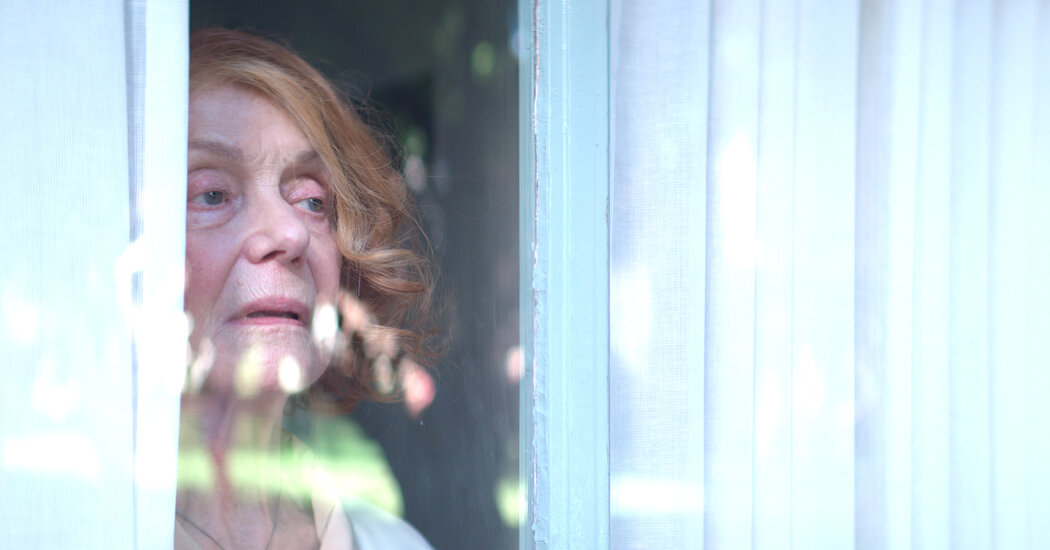
In 2005, the Argentine artist and writer Natalia Kohen was committed to a psychiatric institution against her will by her children in what turned out to be a corrupt scheme to control her finances. That sordid tale provides the loose inspiration for the Uruguayan director Daniel Hendler’s mordant drama. The renowned Argentine actress Marilú Marini plays Martha Hoffman, an 83-year-old art collector, whose bohemian interests, unabashed promiscuity and spendthrift attitude rankle her prudish daughters.
That description might suggest a kooky caricature, but Martha is written and performed with delicate, grounded naturalism. She is utterly believable (and charming) as a former dancer with a lust for life and love for the grungy, queer, underground artists who are her friends and beneficiaries. The film cuts between Martha’s excruciating stay in the care home and the aftermath of that period, when our heroine is visited by a doctor, Leandro Casares (Daniel Hendler), tasked with confirming her diagnosis. As the shy physician and his brazen, quick-witted patient rub off on each other, this cautionary tale of elder abuse expands into a layered, even triumphant drama about living life to the fullest.
Diego Céspedes’s glittering, 1980s-set drama unfolds like a fable. In a mining town in Chile’s Atacama Desert, a group of transgender women live in a house bursting with song, dance and sass. The queen bee is Mama Boa (Paula Dinamarca), and the youngest resident is the preteen Lidia (Tamara Cortés), the adopted daughter of the tall, pale and elegant Flamingo (Matías Catalán). The women teach Lidia how to fight and defend herself against rowdy boys; they have their fair share of practice from handling the miners who both covet and demean them.
When whisperings and accusations of a “plague” culminate in a terrible act of violence, Lidia tries to piece together the truth, and finds herself mired in myths about otherworldly powers and fatal gazes. Céspedes weaves a beautiful metaphorical tale about the AIDS epidemic and the stories people tell to deny reality and find scapegoats. Yet “The Mysterious Gaze of the Flamingo” doesn’t feel heavy with despair. Everything in the movie has a touch of magic, be it the sparkling landscape, the ornate outfits and makeup, and the poetic dialogue laced with tragedy and love.
‘On Your Lap’
Set in the late 1990s, as Indonesia underwent an economic crisis, Reza Rahadian’s film follows a young mother who takes up a job at a kopi pangku: a cafe where men pay waitresses to sit on their laps and serve them coffee. We meet Sartika (Claresta Taufan) late at night as she’s kicked off a bus; she’s alone, pregnant and in need of work, and ends up in a coastal town dominated by fishing enterprises and seedy karaoke bars. Right from the beginning, the movie is light on exposition — we don’t know where Sartika is from, who got her pregnant, or why she is here. It doesn’t matter; she’s here now, and she needs to survive.
“On Your Lap” unfolds as a romance, following Sartika’s budding relationship with a fishing worker who develops a fondness for her and her son, but as the film proceeds it becomes a sharply observed drama about the ripples caused by the economic crisis in the lives of poor and hard-working people. Radio and T.V. broadcasts are heard in the background, relating the news of the day, while Rahadian paints a rich picture of everyday life in the town: Youth struggle to find employment, employees are bullied around by bosses, women emigrate to the Middle East for exploitative jobs just to send home money. These form not just the backdrop to Sartika’s story but are the forces that shape it: The political, Rahadian shows us, invariably becomes the personal.
A movie about a wealthy man-child who hits rock bottom and learns some lessons the hard way may sound tiresomely jaded, but “Sobriedad, Me Estás Matando,” which translates to “Dear sobriety, you are killing me,” is a wonderfully fresh telling of a well-worn tale. The 40-year-old Raffi (Octavio Hinojosa) is as obnoxious as they come: We meet him in the midst of his latest rehab stint, which he is kicked out of for making jokes in poor taste, smoking during therapy and, generally, being an unrepentant jerk. His icy, wealthy parents have also had enough, and Raffi ends up first on the street and then on the couch of an old friend.
For much of the movie, Raffi stumbles about, running into people from his past; each encounter is an occasion for some very effective cringe comedy (it’s impressive how utterly petulant Raffi manages to be while still keeping you glued to the screen) and a glimpse into how our antihero ended up here. A tragic accident, a prison stint, unresolved desires, unprocessed guilt all slowly come to the surface. But at no point does the movie give into cloying sentimentality: The wit remains acrid until the very end.
‘The Flats’
The decades-ago terror of the Troubles still haunts the residents of New Lodge, a housing estate in Belfast, in Alessandra Celesia’s audacious documentary. Once a hotbed for armed conflict between the Irish Republican Army and loyalist forces, the area is now afflicted by drug trafficking, abuse and poverty. “The Flats” focuses on two residents of New Lodge: Joe, a volatile former I.R.A. fighter still battling demons from his past, and Jolene, a young survivor of domestic violence whose sister has been debilitated by addiction.
A loose, intimate camera follows Jolene as she navigates daily life and observes closely as Joe converses with Rita, a suicide prevention counselor. Celesia invites her subjects to recreate painful memories with the assistance of family members and friends, but these stagings aren’t attempts at catharsis; if anything, re-enacting the funeral of his uncle and cousins, whose murder Joe witnessed at age nine, only provokes his anger further rather than release it. Raw, intense and up-close, “The Flats” uses these scenes not so much as therapy but as a means of interrogating an anachronism: Why does this community still seem intractably entangled in the wounds of a bygone era? The film is an eye-opening look at the workings of trauma — how, when left unattended, it trickles through time and generations like a poison.