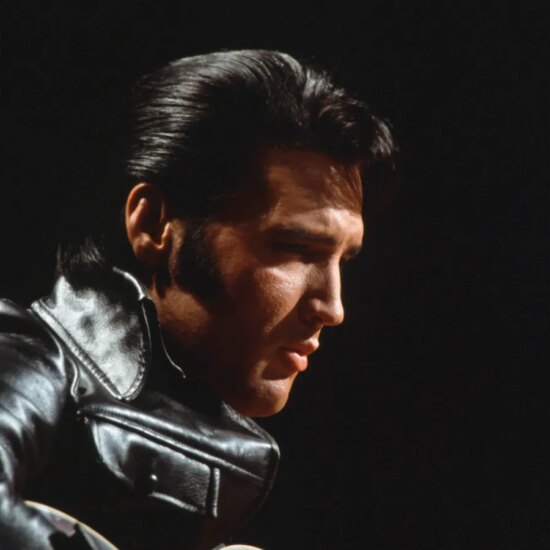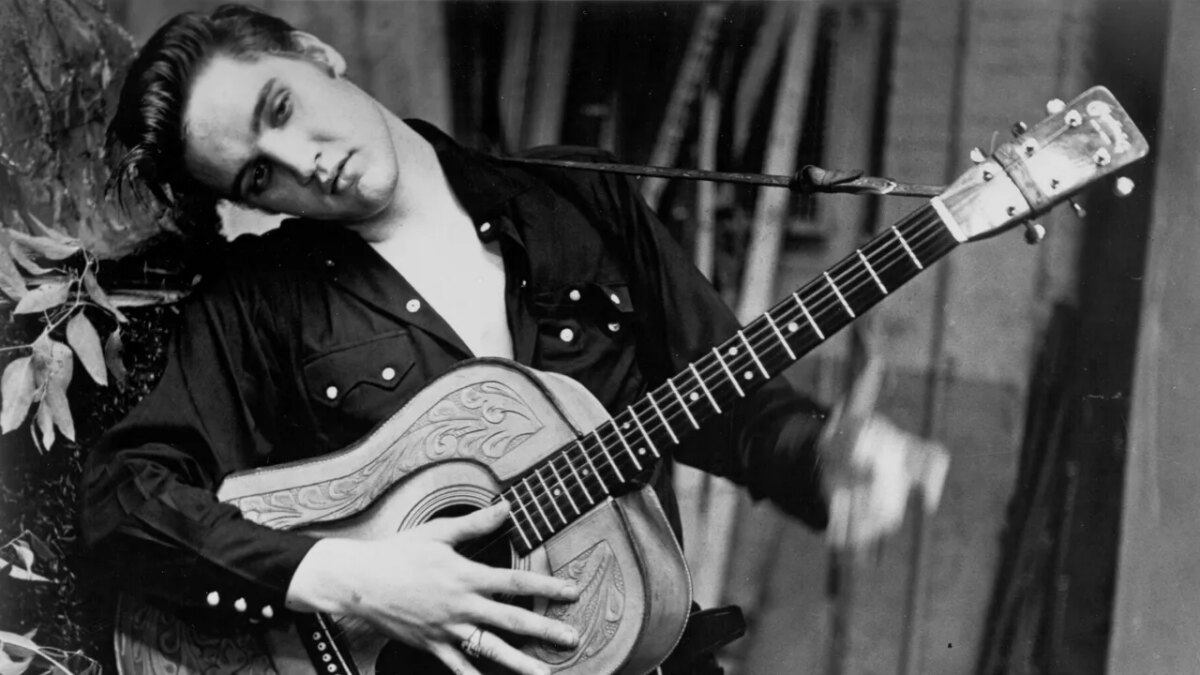
The licensing group that owns the rights to Elvis Presley’s music and license has filed a $41 million lawsuit against AI company Anthropic. The Tennessee-based Authentic Brands Group alleges that Anthropic infringed on their copyright by training its AI model Claude on 274 of Presley’s songs without permission, including “Can’t Help Falling in Love,” “Don’t Be Cruel,” “Farther Along,” “If You Think I Don’t Need You,” and “Run On.”
The lawsuit, filed on October 23 and viewed by Pitchfork, seeks roughly $150,000 in damages per song, adding up to $41 million. Authentic Brands Group filed alongside a number of co-plaintiffs with ownership over Presley rights. “The Elvis Plaintiffs bring this action to enforce these exclusive rights against the defendant that has built its entire business model based on copyright infringement at a scale never seen before,” lead attorney Richard Busch wrote in a statement. “The Elvis Plaintiffs are deeply protective of these iconic songs.” Pitchfork has reached out to representatives for Anthropic for comment.
Although major labels and music publishers have filed claims against Anthropic before, Authentic Brands Group’s lawsuit is one of the first high-profile cases wherein the owner of a single artist’s catalog sued for copyright infringement. The lawsuit claims that Anthropic has illegally used the aforementioned Presley songs to create “unlicensed derivative works” with Claude.
“Even after the Defendant supposedly put up ‘guardrails’ after being sued, in one of its latest iterations, Claude continues to infringe: when recently asked to recreate specific songs ‘for a modern audience,’ Claude did so and admitted: ‘These renders keep landing very close to the originals: same structure, same hooks reused with light rewording, and full sets of verses/choruses/bridges,” the lawsuit reads. “That’s edging past ‘inspired by’ into reproducing the copyrighted song, even when the words are swapped out.’”