
What began as a routine morning hike for a 50-year-old local man became a desperate race against time when he failed to return home later that afternoon. By late afternoon, his wife grew increasingly concerned when repeated calls went straight to voicemail.
Knowing the inherent dangers of the mountain terrain and with daylight beginning to fade, she called Wilderness Search and Rescue’s emergency number: 021-937-0300.
Using the family’s Life360 tracking application, the hiker’s wife provided rescuers with an accurate GPS location for her husband.
“In an environment as vast and unforgiving as Table Mountain, that information changed everything,” said David Nel, spokesperson for Wilderness Search and Rescue Western Cape.
Instead of searching an entire mountainside in darkness, rescuers could head directly to the area while time remained.
“Within minutes, volunteer rescuers, Western Cape Government Health and Wellness EMS paramedics, support staff, and a SANParks Table Mountain National Park ranger dropped whatever they were doing and mobilised toward the mountain,” Nel said.
A small team from the Table Mountain Aerial Cableway made the selfless decision to miss their own staff function to keep the cableway operating for the duration of the rescue. “They quietly stayed behind so rescuers could continue moving people and equipment rapidly up and down the mountain,” Nel said.
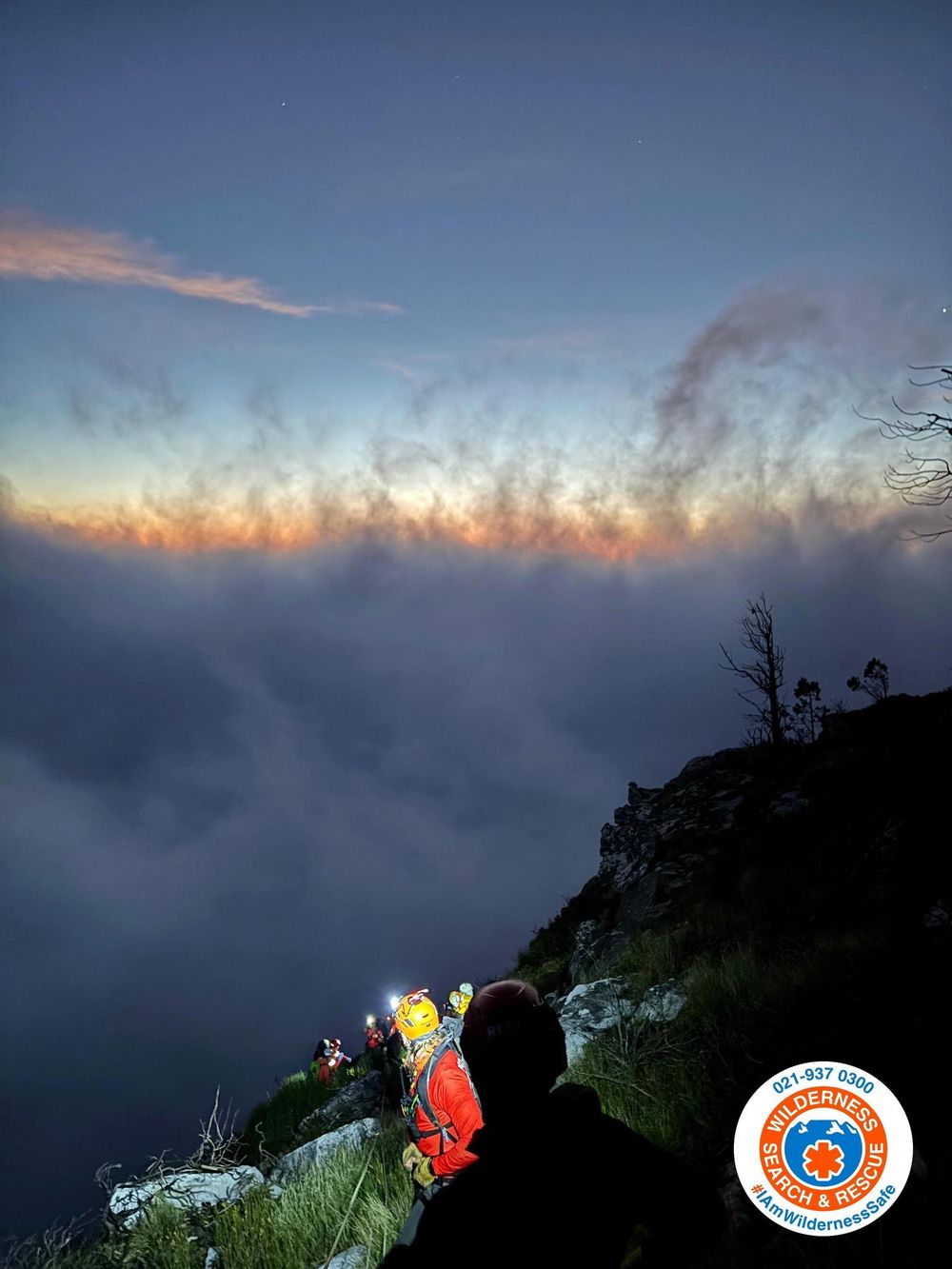
From there, rescuers moved quickly across the steep terrain before leaving the path entirely to search exposed slopes below the trail.
They found the missing hiker just metres from the GPS coordinates provided by his wife. He had fallen off a drop-off onto a narrow ledge below the trail. Cold, critically injured, and unresponsive, his survival depended entirely on the actions of the rescue team.
Quick decision-making by Western Cape Government Health and Wellness EMS paramedics enabled them to carefully descend onto the exposed ledge in darkness and immediately provide advanced life-saving treatment under exceptionally difficult conditions.
“Working on a narrow mountainside at night, they fought to stabilise a man they had never met, relying on skill, teamwork, and countless hours of training,” Nel explained.
“Rope systems were built, anchors were established, and equipment was prepared in the darkness with the kind of calm coordination that only comes from years of training and shared experience,” Nel added.
Once safely down the mountain, the injured hiker was handed over to a waiting ambulance and transported to the nearest hospital for further treatment.
Thursday night demonstrated a fundamental principle of mountain rescue operations in the Western Cape, stated by David Nel as “a powerful reminder that mountain rescue is never about one person or one organisation. It is a community of people all coming together at a moment’s notice to save a life.”
The operation involved no single dramatic moment, but a coordinated response drawing on years of training and professional experience. Each participant, from emergency dispatchers to cable station operators, contributed essential pieces to a successful outcome.
The hiker’s family has requested privacy during his recovery.
IOL