
Christopher Nolan has never met a green screen he couldn’t replace with something real, expensive, and logistically nightmarish. It’s a pattern that runs from Dunkirk‘s Spitfire cockpits to Tenet‘s very real, very destroyed Boeing 747, and it continues with The Odyssey, which is shaping up to be the most ambitious practical production in recent memory.
Committed to Practical Effects
Nolan’s TIME cover story reveals how far his commitment goes.
One big example is the ship (literally and figuratively). Productions at this scale typically stage maritime sequences on a tank stage, a volume, or composite them in post. Nolan did neither. It was a real, seaworthy ship.
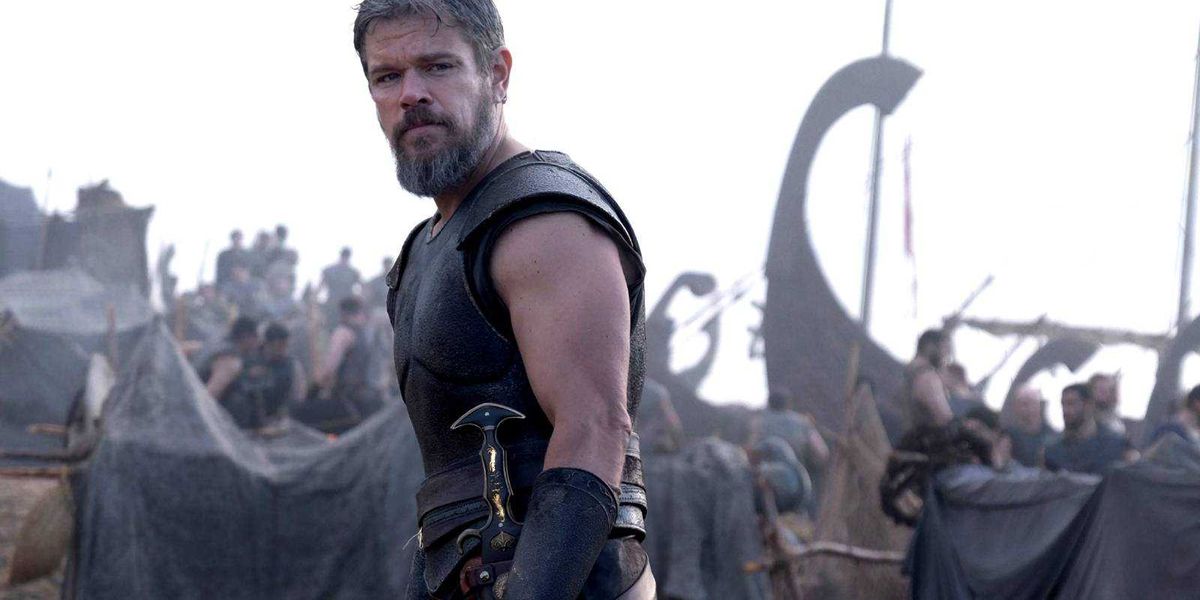
“Movies like this are not getting made anymore,” Matt Damon said. “To do this without a green screen, the way that David Lean would have done it, I don’t know anybody, with the exception of Chris, that’s even trying to do that. There aren’t a lot of people in their mid-50s as protagonists in these epics. I looked at this like the last movie I’d ever do.”
Lean’s epics (Lawrence of Arabia, Doctor Zhivago) earned their scale through physical commitment to location. Nolan is operating in that tradition.
He wants the audience to feel like they’re experiencing everything alongside the characters. He told TIME:
“The wonderful thing about cinema, and IMAX in particular, is that you can take an audience to a place of immersion, feeling close to events like storms, turbulent seas, high winds. You want the audience to be on the boat with them fearing the ocean, fearing the wrath of Poseidon, the way the characters do. That to me is so much more powerful than any individual image you can have [of a god].”
Universal chair Donna Langley confirmed the production earned that authenticity the hard way.
“They were up against the weather and the elements,” she said.
Shooting on Noisy IMAX Cameras
The other major technical challenge was the camera. The Odyssey is the first feature shot entirely on 15/70mm IMAX film, a format that famously fights back against intimate work.
Cinematographer Hoyte van Hoytema and his team spent years solving for this.
“On the last film, I think we cracked the code,” van Hoytema said of the solutions they developed.
New, lighter-weight IMAX cameras and next-generation blimping systems made sync-sound dialogue scenes feasible in a way they hadn’t been before.
Even the costumes followed the same logic. Nolan wanted the visual language of class and power to come from real materials rather than signifiers.
“You do that through materials that would be very expensive,” he said, explaining how tangible choices communicate status on screen.
Okay, so the big lesson isn’t that you definitely have to build a seaworthy ship or use the most fancy camera system. If realism is the goal, if you want your actors and audience to feel everything that is possible in the world you’ve created, then practical is the way to go.
Most of you reading this are not at Christopher Nolan’s level, and that’s fine. But the logic behind his choices scales down to any budget level, and it’s worth understanding before you default to a green screen or a digital workaround on your next project.
Real Environments Free Your Actors
The core argument Nolan is making and has always made is about what actors feel on set and what audiences see on screen. When van Hoytema and his crew are at sea in rough weather, that helps the performance and gets the audience to buy in.
You can apply this at a micro-budget scale. If your scene takes place in a diner, shoot in a real diner rather than dressing a room to look like one. (It will be obvious.)
If your character is a mechanic, put them in a real garage. The smells, the acoustics, and the grime under the nails free your actors from having to pretend. The environment does a ton of work.
Work Around Problems
The IMAX camera story is also instructive, and not just for cinematographers. Van Hoytema’s team spent years engineering around the constraints of the format until they’d solved enough of the problems to make it work.
Whatever your constraints are, whether it’s a camera that’s loud, a location that’s inconvenient, or a costume budget that won’t stretch, the question is whether you’re working around them creatively or just conceding.
Details Build a World Audiences Trust
Nolan’s note about costumes points to a kind of obsession with detail that many filmmakers are guilty of. And it’s great, because we should care about every prop and costume. Nolan talks about using real, expensive materials to communicate class and power on screen rather than relying on shortcuts, and doing so from a point of view of historical research. It may not be 100% accurate to history, but his research shows they got close enough to what would be feasible for the period.
Even if “very expensive” isn’t on the table for you, the principle is still solid. Tangible choices read. Different fabrics move differently or will read on camera in diverse ways. Textures catch light or will make noise. The weight of a real object in an actor’s hand changes how they hold it.
These details accumulate into a world the audience trusts, and they’re available to you regardless of budget if you’re paying attention.
Start with the Experience You Want to Create
The bigger takeaway from The Odyssey is about how important intentionality is. The reason to go practical isn’t being allergic to technology, wanting to be contrarian, or doing it just for the heck of it. Nolan made a clear-eyed decision about what kind of experience he wants to create and is building from that.
Before your next project, try asking the same question. What do you want your audience to feel, and what’s the most direct path to putting them there?
Sometimes the answer is a visual effect. But often the answer is just going to the real place or finding a real prop or real costume.
The Odyssey is scheduled to be released in theaters and IMAX on July 17, 2026.