
Can a film tell its story without a single line of dialogue?
That was one of the questions I wanted to explore when I began making Persian Gulf (2026).
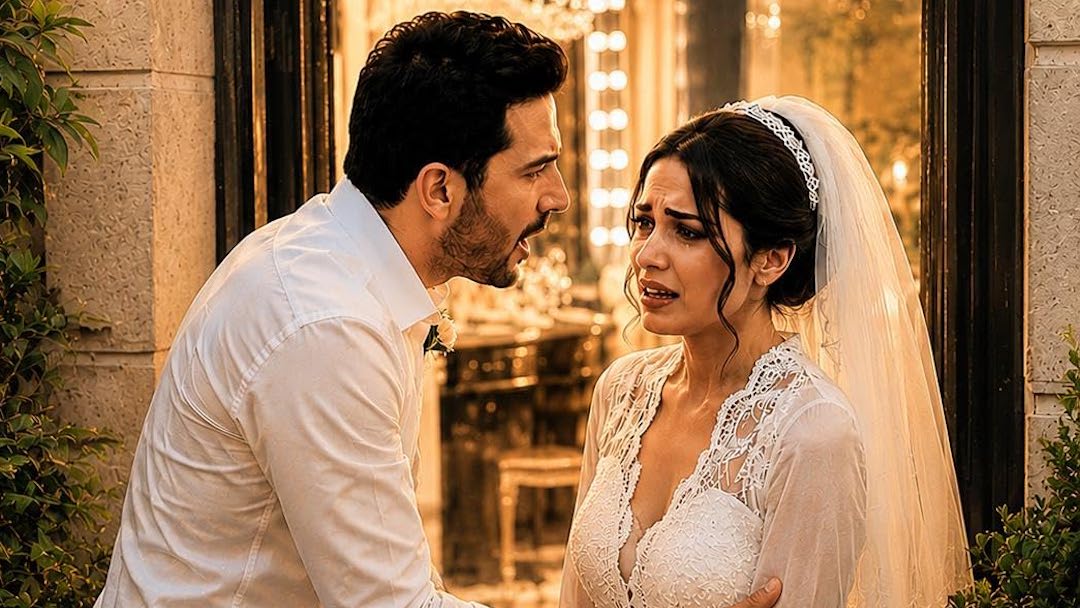
The film is a 4-minute-31-second, dialogue-free short film made in Iran, combining visual storytelling, original music and AI-assisted filmmaking. It follows a journey that begins with a bride and a wedding, moves through city streets and the world of mining, enters the atmosphere of war and family, and ultimately reaches the shores of the Persian Gulf.
But the story is not explained to the audience.
There is no character standing in front of the camera explaining what happened. There are no conversations telling us what the characters are thinking. Instead, the audience has to read the images, movement, expressions, music and the spaces between them.
That became the real challenge.
Starting With a Story, Not a Tool
When people talk about AI filmmaking, the conversation often starts with technology.
Which image generator? Which video model? Which animation platform? Which prompt?
For me, the process began somewhere else: with the story.
I wanted to make a film about land, memory, identity, conflict, family and the Persian Gulf. I also wanted the film to move between very different environments and moments — from a wedding celebration to the city, from the world beneath the earth to the experience of war, and finally to the sea.
Making such a film through conventional production would require actors, locations, costumes, sets, equipment and a considerable amount of logistical planning.
As an independent filmmaker working in Iran, I did not have access to a traditional film production of that scale.
AI changed what was possible.
It did not remove the need for filmmaking decisions. It changed where those decisions happened.
Instead of asking, “How can I afford to shoot this scene?”, I could begin asking, “What should this scene look and feel like?”
Creating a World With Words
One of the most interesting parts of making Persian Gulf was creating its characters.
The film contains dozens of characters — including the bride, groom, miners, families, civilians and people caught within the atmosphere of conflict. In total, I created 72 AI characters for the project.
Most of them began with written descriptions.
I had to think about age, appearance, clothing, environment, expression and personality before attempting to turn those descriptions into visual characters.
In traditional filmmaking, a director might communicate many of these decisions to a casting director, costume designer, makeup artist, production designer and cinematographer.
Here, much of that communication happened through words and images generated from those words.
That sounds simple until you try to maintain a coherent world.
A character cannot look completely different from one shot to another simply because the prompt changed slightly. A location needs to feel like the same location. The emotional atmosphere of one scene needs to connect to the next.
AI can generate an image.
It cannot decide what the image means in the film.
That remained my responsibility.
The Mine Beneath the Story
Mining is not simply a visual element in Persian Gulf.
It is part of the film’s idea of homeland.
The film moves between the surface of the country and what exists beneath it. The mine becomes a visual connection between people, land and natural resources.
That was important to me because I have spent much of my professional life working around mining and media through RadioMadan.
The mining landscapes in the film therefore have a personal connection to the world I know.
AI allowed me to transform that familiar world into something cinematic — to move the audience from ordinary human spaces into landscapes that could be symbolic as well as physical.
The result is not intended to be a documentary representation of mining.
It is a fictional visual journey.
Why No Dialogue?
Dialogue can make storytelling easier.
If a character says, “I am afraid,” the audience immediately understands fear.
If another character says, “The war has started,” there is no ambiguity about what has happened.
I wanted to remove that safety net.
Without dialogue, the audience has to interpret.
A mother holding a child means something.
A person running through a street means something.
A bride looking at a camera means something.
A landscape destroyed by conflict means something.
The meaning is created not only by what is shown, but by how one image follows another.
Music became particularly important for this reason.
The soundtrack does not simply sit underneath the images. It helps connect scenes that otherwise have no spoken explanation.
The film became a visual and musical language.
Making War Without Turning It Into a Speech
The presence of war in Persian Gulf is not presented through political speeches or explanatory dialogue.
Instead, I wanted to show its effect on ordinary people.
The film moves from personal moments to a wider sense of conflict. Family, fear, separation, movement and survival become more important than explaining the politics of the conflict itself.
That was another reason to keep the film dialogue-free.
I wanted viewers from different backgrounds to be able to approach the story through human experience rather than through a long explanation.
A viewer does not need to know every detail of the world in which the film was made to understand that something has changed.
From the Wedding to the Persian Gulf
The journey of the film is deliberately structured around contrast.
It begins with a wedding — an event associated with love, family and the beginning of a new life.
Then the world expands.
We move into streets and urban spaces. We enter the mining landscape. The atmosphere changes. Conflict enters the story.
And eventually the film reaches the Persian Gulf.
The sea at the end is more than a location.
It represents arrival.
After moving through people, cities, underground landscapes and conflict, the film ends at a place connected to memory, geography and identity.
I wanted the audience to arrive there emotionally as well as geographically.
What AI Could Not Do For Me
One of the biggest misconceptions about AI filmmaking is that generating images is the same as making a film.
It isn’t.
AI can give you possibilities — sometimes hundreds of them.
But filmmaking is largely about deciding what not to use.
A generated image can be beautiful and still be wrong for the story.
A technically impressive shot can destroy the rhythm of a scene.
A character can look perfect but have no emotional purpose.
The more I worked on Persian Gulf, the more I understood that the difficult part was not generating something.
The difficult part was choosing.
What should the audience see?
What should remain unseen?
When should a shot end?
Which image should come next?
When should the music become louder?
When should the film become quiet?
These are filmmaking questions.
The technology is only part of the process.
AI and the Independent Filmmaker
For me, the most exciting aspect of AI filmmaking is not that it can make expensive-looking images.
It is that it can give an independent filmmaker access to ideas that previously might have remained impossible to produce.
That does not mean AI makes filmmaking easy.
It creates different problems.
Consistency becomes a problem. Control becomes a problem. Editing becomes a problem. Knowing which generated material actually belongs in your film becomes a problem.
There are also larger questions about authorship, ethics and the relationship between human creativity and machine-generated material.
Those questions should not be ignored.
But I also believe that independent filmmakers should experiment with the technology rather than simply wait for the industry to decide what it means.
Cinema has always changed when new tools appeared.
Sound changed filmmaking.
Portable cameras changed filmmaking.
Digital cinematography changed filmmaking.
Computer-generated imagery changed filmmaking.
AI is another technological shift — but the existence of a new tool does not automatically create a new story.
The filmmaker still has to bring the story.
The Audience Completes the Film
Perhaps the most interesting result of making Persian Gulf without dialogue is that different viewers can interpret the same images differently.
One person may focus on the relationship between the bride and groom.
Another may focus on the miners.
Someone else may see the film primarily as a story about war.
Another viewer may see the mine as a metaphor for natural resources and homeland.
I don’t necessarily want to remove those different interpretations.
I think they are part of the experience.
A short film does not always need to answer every question.
Sometimes it can create the question.
What I Learned From Making Persian Gulf
If I had to reduce the experience to one lesson, it would be this:
Don’t start with the AI. Start with the reason you want to make the film.
Technology changes quickly.
The tools available to filmmakers today will be different tomorrow.
But the reason for telling a story can remain.
For Persian Gulf, that reason was a desire to explore homeland, identity, memory, conflict, family, natural resources and the Persian Gulf through a form of cinema that depended almost entirely on images and music.
AI gave me a way to attempt that experiment independently.
But the technology did not decide what the film should say.
I did.
And ultimately, the audience does too.
Persian Gulf (2026) is a dialogue-free short film by Iranian filmmaker Ali Doosti, created with AI-assisted imagery and original music.
Sometimes the most important line in a film is the one that is never spoken.

Ali Doosti is an Iranian mining engineer, filmmaker, and media professional based in Tehran, Iran. He is the founder and director of RadioMadan, an independent media platform dedicated to the mining and mineral industries through documentaries, podcasts, and audiovisual storytelling.
His recent work, Persian Gulf (2026), is an independently produced AI-assisted short film that explores human resilience, compassion, and hope in the face of war, while carrying a message of peace and freedom.
Related