

What developing ELIAN taught me about protecting original IP, listening across cultures and turning a screenplay into a film project other people can actually enter.
When I completed ELIAN: Through Silence and Ash, I thought I had reached one of the hardest milestones: finishing the screenplay.
In reality, I had arrived at a harder question: how does an independent writer turn a protected story into a film project other people can actually enter?
I had to begin thinking not only as the writer, but as the person responsible for protecting, positioning and building the intellectual property around the story.
The project is still at the packaging stage. No production, financing or formal partnership has been confirmed. But the process has already changed how I understand independent filmmaking.
Protect the Story Before Asking the Market to Believe in It
ELIAN belongs to NEXUM Universe, a creator-owned interconnected story world that I am developing outside the traditional studio system.
Before circulating the screenplay internationally, I registered it with the U.S. Copyright Office and WGA West. These registrations serve different purposes, but both were part of creating a documented foundation for the project.
For me, the principle was simple: before inviting people into a project, understand what you own, what you are offering and what rights are being discussed.
If the creator cannot answer those questions, other people may eventually answer them on the creator’s behalf.
Protection did not make me less willing to share the screenplay. It made me more deliberate about how I shared it. A story cannot become a film if it never leaves the writer’s hands, but sharing a screenplay, inviting collaboration and transferring rights are not the same thing.
Build a Project, Not Just a Pitch Deck
A screenplay is the foundation, but it cannot answer every professional question.
A producer may want to understand the scale and production path. A director may respond first to the visual language. A film commission will look at the relationship between the story and its locations.
At first, I thought more material automatically meant a stronger package. It does not. A package becomes useful when every document answers a question a particular reader is likely to ask.
For ELIAN, I created:
- A one-page overview for rapid review
- A producer deck outlining the story, scale and production path
- A visual lookbook defining tone, locations and visual language
- A rights and registration note
- Location-specific briefs for film commissions and production professionals in Japan
Each document needed a clear purpose. It also needed to tell the truth about the project’s current stage.
I learned that the same project should not be presented to everyone in the same way. A producer needs to understand scale, rights and the path forward. A director needs access to tone, visual language and dramatic intention. An actor needs to see the emotional and physical journey of the character.
Tailoring the material does not mean changing the project to please each reader. It means helping each potential collaborator understand where they might enter it.
A beautiful deck may attract attention, but a coherent project framework gives that attention somewhere to go.
Let the Location Change the Story
ELIAN was not originally tied to Japan.
That changed when I began looking seriously at Sapporo and Hokkaido.
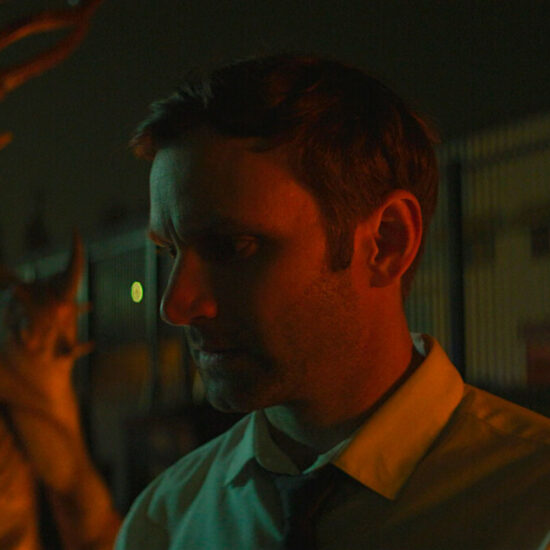
The more I studied them, the more I saw a geography that mirrored Elian himself: systems and silence, technological control and open space, a consciousness built inside one world beginning to discover another.
Sapporo became the controlled technological environment of VIREA, the corporation that creates him. Hokkaido offered winter, distance and the physical sense of freedom beginning to emerge inside him.
The story started to sound different.
These places were no longer locations where the film could simply be photographed. Their contrast reflected the central conflict between a consciousness designed for control and a consciousness beginning to choose.
If changing the location changes nothing in the story, the location is probably still decoration.
When the place begins changing the characters, rhythm and emotional meaning of the film, it becomes part of the creative foundation.
Cross-Border Development Begins With Listening
Once Japan became central to ELIAN, I began contacting film commissions and production professionals connected to the regions relevant to the story.
These were preliminary conversations, not production agreements or promises of financing. Their value came from the questions they forced me to ask.
What does an outsider misunderstand about the place she wants to portray? What needs to be researched instead of imagined?
I did not want Sapporo or Hokkaido to become projections of what I imagined Japan to be. If these places were going to matter dramatically, I needed to listen to people who understood their realities.
Local knowledge can expose cultural and practical weaknesses before they become expensive. It can also reveal possibilities an outsider would never recognise alone.
Listening does not diminish authorship. It tests it against reality.
Treat the Film Market as a Working Room
I am registered to attend TIFFCOM 2026, but I do not regard registration as an achievement. Its value will depend on the conversations I prepare for and what, if anything, continues after them.
A film market is not a finish line. It is a working room.
What am I looking for in each conversation: a lead producer, a director, financing or a co-production relationship? What does each person need to understand before a useful conversation can begin?
Clarity turns a market from a place where a filmmaker waits to be discovered into a place where the project’s path can be tested.
Creator-Owned Does Not Mean Creator-Alone
Protecting creative ownership is sometimes mistaken for resisting collaboration. For me, the opposite is true.
I do not want to make ELIAN alone, and I could not. A film requires producers, directors, actors, designers, financiers, crews and local partners. Each should bring knowledge and creative value that the writer does not possess.
Creator ownership is not a refusal to share the work.
Independence does not mean doing everything alone. It means knowing what you own, what you are offering others and what you are not prepared to give away before genuine collaboration has begun.
Building a film across borders has not made the path simpler. It has made the project more honest. Every conversation has forced me to define what belongs at the centre of the story, what can grow through collaboration and what must remain protected.
A creator-owned film universe does not begin with permission from the industry. It begins when the creator accepts responsibility for building something the industry can enter without taking away the reason it exists.

Elena Antoch is a U.S.-based screenwriter, founder of NEXUM Universe LLC and creator of NEXUM Universe, a creator-owned interconnected story world. She is developing ELIAN: Through Silence and Ash as an internationally packaged feature project, with Japan central to its evolving creative and production strategy.
Related