
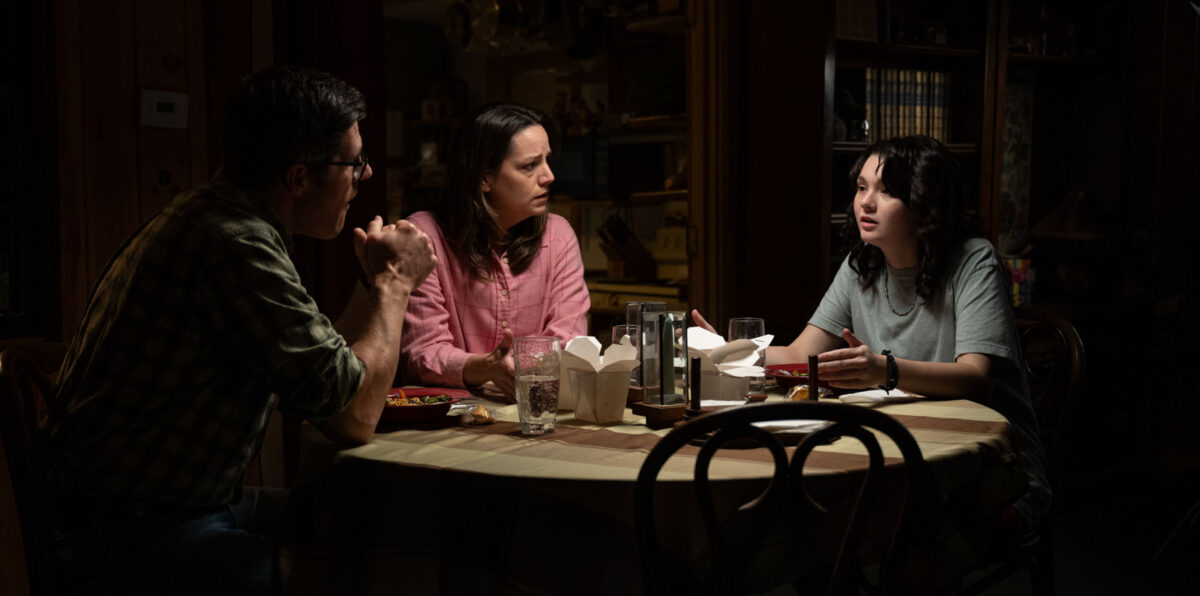
Transitioning genders is hard. Transitioning genders in a small town obsessed with Bigfoot? That’s the plot of Bigfoot Woods, the first feature-length film directed by Elizabeth Chatelain, and conceived and written by Bruce and Abel Pavalon. Bridget Benally (Ambrose Velasco Jenkins) is that odd duck in a small town. Starting Bigfoot Woods as Non-binary, Bridget and their father Paul (Mad Men’s Rich Sommer) shoot a YouTube show in the woods each Saturday. Bridget’s mother Taylor (Tristen MacDonald) works at the local Senior center. Things are moving along at a laconic pace until the day townsfolk believe they spot a Bigfoot doing crunches in one of the Benallys’ videos. Rocketed to local stardom for this accidental footage, Paul and Bridget are mobbed by the townsfolk with requests to visit the site they shot that episode, and to develop their private swampland.
All the while, Bridget is realizing they are not non-binary. In fact, Bridget proclaims himself to be a guy. He wishes to transition to manhood. Obviously, such a proclamation creates stress and duress for the entire Benally family. Also, their small town is very Christian. No one is particularly interested in supporting a teenager’s desire to transition genders. The entire locale would much rather obsess endlessly about Bigfoot. This will obviously cause Bridget to have deeply hurt feelings when his friends dismiss him in favor of focusing on the fame and allure of filming Bigfoot.
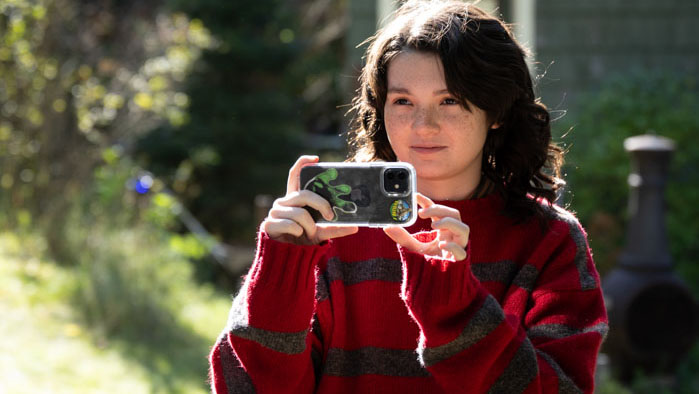
Bridget Benally (Ambrose Velasco Jenkins) films footage outdoors in a scene from Bigfoot Woods.
“Things are moving along at a laconic pace, until the day townsfolk believe they spot a Bigfoot doing crunches in one of the Benally’s videos.”
In Bigfoot Woods, the Pavalons have scripted a weird but knowing tale concerning growing up different in rural America. While it’s not particularly pleasant, at least Bridget can enjoy some notoriety for capturing a Bigfoot on camera. Throughout Bigfoot Woods, the footage remains Bridget’s saving grace. His proverbial ace in the hole. No matter what happens, or how he pisses off the townsfolk, they have to admit it was him and his dad who caught that blessed Bigfoot footage.
I found Bigfoot Woods to be at times charming, and other times tense. This speaks to the nature of a family coming to terms that their pretty baby girl has announced they are instead a handsome boy. It’s a hard thing to reckon with, being the parents of a kid with gender dysmorphia. While wisdom tells you to love the child regardless, Paul and Taylor still have to come to terms with this momentous and monumental decision Bridget has made, and determine whether the teen really understands what they will need to do to become the boy they identify as.
Elizabeth Chatelain is a keen observer of humanity in all its gendered awkwardness. She possesses that rare quality of being able to direct a child actor. Ambrose Jenkins’ portrayal of Bridget is greatly aided by Chatelain and her direction. The rest of the cast acquits themselves wonderfully, and while I do see shades of Harry Crane in Sommer’s performance of Paul Benally, it’s muted. It’s much more a warm, fatherly figure than an awkward ’60s tech nerd.
So, if you are a fan of Bigfoot, seek out Bigfoot Woods. If you enjoy coming-of-age stories, especially ones concerning gender transition, Bigfoot Woods is the film for you. It’s as strange and warm as you’ll find on streaming. A true balm for the soul.