
There is a moment every development executive knows.
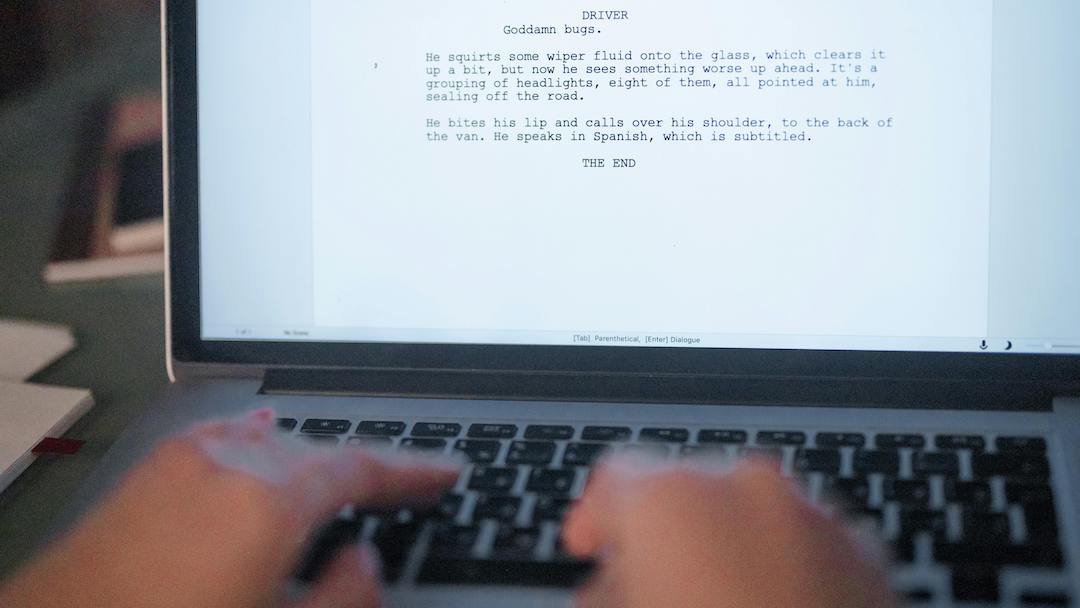
A script lands on your desk. Coverage tells you the plot. Genre tells you the surface. And somewhere in the read, you feel something – this works, or this doesn’t, or this is almost something – but when you sit down to give notes, the language runs out. “The second act doesn’t work.” “The protagonist feels passive.” “Something is off with the ending.”
These are real feelings. They are not useful diagnoses.
The writer goes away, comes back three drafts later, and the problem has moved. It hasn’t been solved. It has been rearranged.
This is not a failure of craft. It is a failure of language. Most mainstream development frameworks do not give us a precise enough vocabulary for what a story structurally is – only for whether it has followed the right instructions.
Frameworks are instructions. They are not maps.
For forty years, the dominant tools for thinking about story structure have been frameworks. Save the Cat. The Hero’s Journey. McKee’s Story. Aristotle’s Poetics interpreted through a Hollywood lens.
These are useful tools. Genuinely. They give writers a sequence of events to construct and a vocabulary to discuss them. They have produced thousands of competent, complete scripts.
But here is what they rarely provide. A clear answer to the question underneath every development conversation: what kind of story is this, actually?
Two scripts can follow the Save the Cat beat sheet identically – opening image, theme stated, catalyst, debate, break into two – and produce stories with completely different structural identities. Different emotional shapes. Different registers dominating the arc. Different resolution levels. Because the framework tells the writer where to put the beats. It says nothing about what the beats are doing structurally, or what emotional territory they are actually traversing.
As a development executive, you are reading both of those scripts and knowing something is different about them. You just do not have the language to say what. Frameworks sequence events. Grammars describe relationships.
A grammar is not a framework.
We analysed 459 films. Not to validate the existing frameworks. To ask a different question: do films exhibit a finite set of structural identities, the way Indian classical music exhibits a finite set of raagas? Or how western music has scales?
Audiences do not respond to structure in the conscious sense. They respond to rhythm, anticipation, escalation, release, contradiction – the recurring emotional geometries beneath the surface of a story. What produces those geometries is not the sequence of plot events. It is the relationship between emotional registers across the full arc of the film. That is what a grammar describes.
The library spans drama, thriller, action, horror, comedy, romance, science fiction, and fantasy, across English and international titles, from 1970 to 2025. Films were selected to represent a range of genres, languages, production origins, and release eras. Structural patterns were identified computationally from beat-level screen time data and then validated manually – confirming that the same patterns recurred independently across genres and languages, not as artefacts of a single tradition.
In Carnatic music, a raaga is not a composition. It is a structural specification. Five parameters define it: which note dominates, which note supports it, which note the phrase opens on, which note it comes to rest on, and what the characteristic movement through the scale looks like. Two completely different compositions can share the same raaga because they share the same structural grammar. The surface is different. The geometry is the same.
We applied the same logic to film narrative. Eight emotional registers – stability, disruption, pursuit, reversal, crisis, revelation, climax, resolution – map to the eight swaras. The same five parameters apply. Which register dominates the arc. Which register supports it. Which register the story opens in. Which register it resolves to. And what the characteristic movement looks like across the full runtime.
From 459 films, 23 archetypes emerged.
Not genres. Not beat templates. Structural identities. The actual shape of what the story is doing in time.
What this looks like in development.
A script comes in. The logline promises pursuit. High energy, kinetic, forward momentum – a protagonist chasing something across the full arc of the story.
The structural analysis shows something different. The script is spending 40% of its screen time in the crisis register. Pursuit is present but thin. Reversal is doing most of the dramatic work.
This is not a second act problem. This is a structural identity problem. The script is not the story it claims to be. The writer has followed their framework correctly and produced something structurally unrelated to their own premise.
Now you have a diagnosis, not a feeling. And the note changes completely. You are not telling the writer to fix the second act. You are telling them which story they are actually writing and helping them decide: is this the story you want to tell, or is it not?
That is a development conversation with direction. Everything that follows has a target.
Same archetype, completely different films.
This is the part that matters most for how you think about development.
The Unhealed Wound. Reversal dominant, closing mid-register. A story where the reversal defines everything but resolution never fully arrives. The protagonist reaches the end changed, but not healed.
Frankenstein. Marriage Story. The Silence of the Lambs. Three completely different films. Different worlds, different characters, different genres, different tones. The same structural identity. In each, the protagonist exits transformed but emotionally unresolved. The reversal is the engine. The wound is the subject. Resolution is withheld because that is the honest shape of what the story is saying.
The archetype does not constrain the writer. It does not tell them what to write. What it gives you as a development executive is a target: this script is trying to be The Unhealed Wound. Now every note you give points toward that. You are not fixing problems in the abstract. You are developing this specific story toward its fullest expression of what it already is.
The writer’s creativity lives entirely within that space. The archetype is the container. What they put in it is theirs.
The Parallel to the Master Koi Fish farmer.
A Master Koi farmer looks at a 4-week-old fish fry and knows what it is going to become.
Not because they are guessing. Because they have learned to read the early markings. They know what a black body fry will develop into and what a white body one will develop into. In the first and second months they start to see color. This one is a Kohaku – red and white, two colours, a specific set of pattern principles that will develop over years into something either extraordinary or ordinary depending on how it is bred and what conditions it is given. This one is a Sanke. This one is a Showa. The classification is precise and it has consequences. You do not breed a Kohaku toward Utsuri markings. You develop it toward the most complete expression of what it already is. The darker spots will emerge beautifully – but only if you know what you are looking at from the beginning.
That is the development executive’s job described exactly.
You are not manufacturing stories to a template. You are looking at what comes across your desk and seeing – early, clearly, before eighteen months of development have passed – what this thing wants to become. And giving it the conditions to get there.
In an era where content volume is infinite and attention is scarce, that skill is the differentiator. Not better instincts. Better instruments.
One last thought.
The role of the development executive is changing.
It has always involved fielding scripts, giving notes, and backing projects. But as creative tools become more abundant – as the volume of stories entering the market multiplies – the curatorial function becomes more important, not less. The DE is increasingly the filter through which a society’s stories pass. What gets through shapes what people believe about themselves, about others, about what is possible.
That is a significant responsibility. And it is arriving at exactly the moment when the language to do it precisely is finally available.
The Koi farmer who can look at a tank of koi fry and see which three will become extraordinary is not guessing. They have a classification system built from close observation, encoded into a language precise enough to act on early. That is what a structural grammar gives the development executive. Not a replacement for taste. An instrument that makes taste legible.
The 23 archetypes and the full 459-film benchmark library along with the full research whitepaper documenting the methodology, dataset and findings are at arc.quanten.co/archetype. The framework mapping – where Save the Cat, the Hero’s Journey, and a dozen other major frameworks sit within the archetype system – is at arc.quanten.co/archetype/frameworks.
Vijay Anand is the Founder and CEO of Quanten Media (quanten.co), a narrative intelligence platform for filmed content based in Singapore. Quanten Arc is a story intelligence platform, built around a benchmark library of 459 produced films, series, and shorts that gives studios a grammar for identifying structurally sound stories.
Related