
South Africa has been selected as the “Country in Focus” for the upcoming edition of the Berlinale European Film Market (EFM).
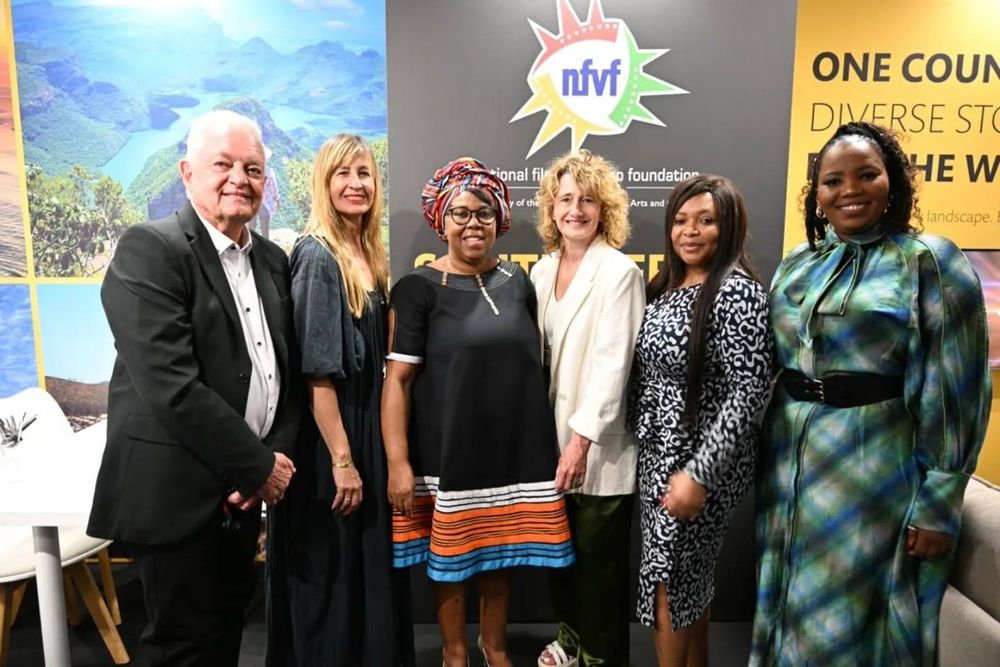
The news was revealed while the National Film and Video Foundation (NFVF) attended the 79th Cannes Film Festival in France.
In 2025, Gayton McKenzie blocked the NFVF from travelling to the 78th Cannes Film Festival and ordered the organisation to remain within its mandate, which stipulates that 75% of the NFVF’s overall budget must be spent on making and funding films and content.
However, this year, the NFVF seems to have been greenlit to attend.
Key figures participating in the 2026 Cannes programme, for Team SA, along with key individuals from the NFVF, consisted of well-known filmmakers and industry voices Obett Motaung, Rosetta Mabaso, Dian Weys, Mark Engels, Steven Markovitz, Taryn Joffe, Mbali Mashaba, Firdoze Bulbulia, and Milton Reddy.
South African cinema has long been part of the Berlinale’s history. In 2005, “U-Carmen eKhayelitsha” by Mark Dornford-May became the first South African film to win the Berlinale’s Golden Bear, marking a milestone in the festival’s relationship with the country’s cinema.
In a press statement, Minister of Sport, Arts and Culture Gayton McKenzie, shared that South Africa wants the world to see it as both a creative powerhouse and a viable business partner in the global film industry.
“This is more than recognition; it is an invitation. South Africa brings to the European Film Market an exceptional combination of creative talent, production capability and stories drawn from one of the world’s most compelling cultural landscapes.
“We are open for collaboration, co-production and investment, and we are confident that those who engage with our industry at the Berlinale will leave with a deeper appreciation of what South Africa offers as a creative and commercial partner.
“From ‘U-Carmen eKhayelitsha’ to ‘The Heart Is a Muscle’, the world is experiencing authentic South African storytelling in all its layers.
“Our commitment as government is to ensure that the working relations and co-productions foster growth for all involved. Furthermore, addressing the challenges that have affected our filmmakers’ ability to produce at scale is being addressed,” said McKenzie.
McKenzie was not at the signing ceremony, but Department of Sport, Arts and Culture Director General, Dr Cynthia Khumalo, attended in Cannes.
“Given the socio-economic challenges facing our nation and its global position, this recognition holds great significance not only for our film industry but for the entire country.
“We are thrilled and grateful for the opportunities this prestigious festival market will provide our filmmakers and the spotlight it will cast on the rich, nuanced, and diverse stories South Africa has to offer,” said Khumalo.
Also in attendance was Berlinale Festival Director Tricia Tuttle, who said that South Africa being the European Film Market’s ‘Country in Focus’ for 2027 reflected both its longstanding relationship with the Berlinale and the extraordinary vitality of its film industry. “South African cinema brings together powerful storytelling, remarkable creative voices, and a strong international outlook.
“We are excited to shine a spotlight on a film culture that continues to shape global conversations and to create new opportunities for collaboration between South African and international partners at the EFM,” said Festival Director Tricia Tuttle.
Industry stakeholders are happy about the opportunity for a platform that could create funding.
While the initiative presents valuable opportunities for South African filmmakers, offering funding and investment, there is an unresolved question regarding whether the South African government provided the financial backing for this venture.
IOL
Get your news on the go. Download the latest IOL App for Android and IOS now.