At its core, Klara and the Sun asks: What would happen if Paddington was adopted into a broken family, and how would Paddington’s presence make this family whole again? Okay, that sounds familiar. We’ve seen that movie. But what if Paddington was an android? What if there are only two surviving members of this family?
That is the challenge with adapting Kazuo Ishiguro’s Klara and the Sun, a story about Klara (Jenna Ortega), an Artificial Friend (AF) whose programming limits her understanding of the world. Her world is smaller still: a store window, where she daysdreams about the sun and waits to be adopted. There’s even a Home for Retired AFs, a nod to Paddington‘s (2014) Home for Retired Bears.
But Taika Waititi is not Paul King. Nor does the Klara and the Sun director craft his film in serious conversation with the ones that came before it. It certainly references them. A lot. Klara and the Sun attempts to be a family-friendly movie, a hard sci-fi dystopian, and a domestic drama. In some ways it succeeds, but in most ways, the movie competes for too many audiences and fails in its attempt to satisfy all three.
Waititi is undoubtedly funny, and his trademark deadpan witticisms that balance laughter with sadness shine through. Klara is a discounted AF who, for some reason, stands on one leg whenever she daydreams, which is often, and the other characters never stop calling her out for it. This minor character tic, which is one of the film’s funniest recurring gags, is also what makes Klara, who prays to the sun like a god, so endearing.
Klara and the Sun also has plenty to say about class disparity. Josie (Klara’s owner, played by Mia Tharia) is a sickly, “lifted” (see: gifted) teenager who voluntarily enhanced her genetic makeup to join an elite group of the most intelligent and promising young adults on Earth. It’s better to rule the world than be ruled by it, Josie argues. Only the rich have access to the procedure.
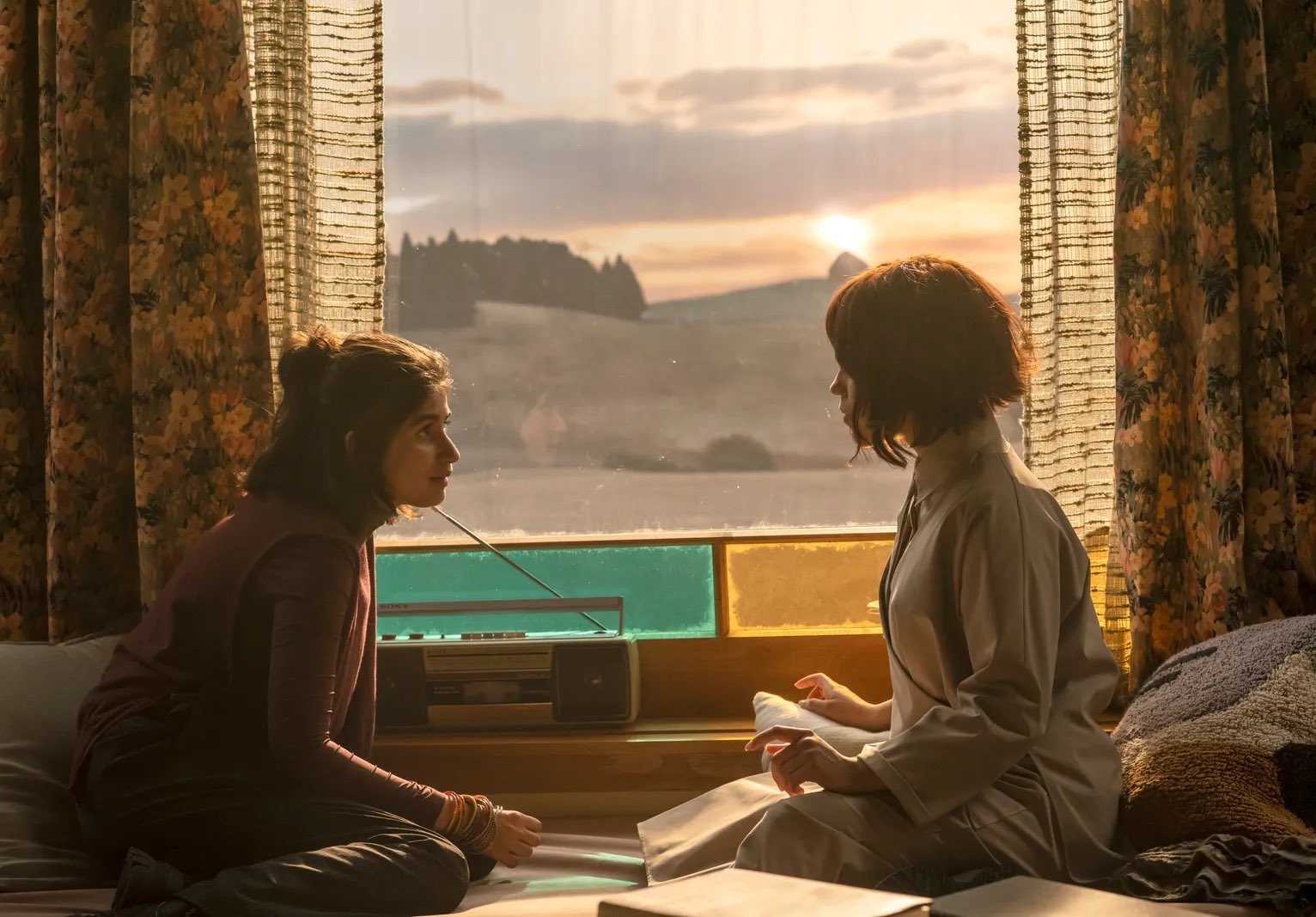
The funniest scene takes place in Josie’s room during her first lifted recital. Her piano performance is ruined by some of the snottiest kids you’ll ever meet. In this scene, Waititi nails the revolting treatment of the AFs by focusing the camera on a group of spoiled brats. They all speak in nasal tones.
That same humor, however, is also Waititi’s Achilles heel. For every snappy one-liner that lands, there are two nose-curling attempts for a quick laugh. Two back-to-back movie references are perfect examples. Within the same handful of minutes, one character fires off a sly variation of Brad Pitt’s legendary Se7en quote (“What’s in the box?”). On its own, it is a gut-buster. The problem is the immediate follow-up of a more recognizable movie: a Star Wars: A New Hope line, recited verbatim. The film’s lack of trust in its audience is the difference between making in-genre references to fish for laughs vs. being in conversation with what came before. The inspirations are mere dress-up to satisfy the worldbuilding.
Worse still is that there is just too much of the same voice in every character. It all feels like Waititi filled the cast with stand-ins because nature, cruelly, won’t let him play every role himself. If only autonomous androids existed. The clearest case is Scarecrow (Jesse Griffin), a farmland-guarding AF who does a better Taika Waititi performance than anyone not named Taika Waititi. I haven’t read the novel, so it’s hard to say whether the director’s vision gels properly with the novelist’s vision of this absurd premise.
When the film dares to venture outside its generic farmland setting, we see a half-baked cyberpunk city set in an unspecified time post-World War III. It looks like Blade Runner by way of a mall food court. Bits of retro-futuristic technology evoke the Fallout aesthetic. The pieces are there but nothing connects them in conversation. Instead, Klara and the Sun merely pulls from past works to fill a blank canvas.
The film’s best ideas peek out of their shells, only to retreat just as fast. Klara’s vision, for one, takes time to calibrate: jumbled images buffer themselves clean, a glimpse of how primitive her machinery really is. It’s the most distinctive imagery in the film, and there isn’t nearly enough of it. Even a barn set ablaze, beautifully shot, comes with a nagging sense that the film will drop the image as soon as it lands.
-

Jenna Ortega in Klara and the Sun Sony Pictures Releasing -
-
 Sony Pictures
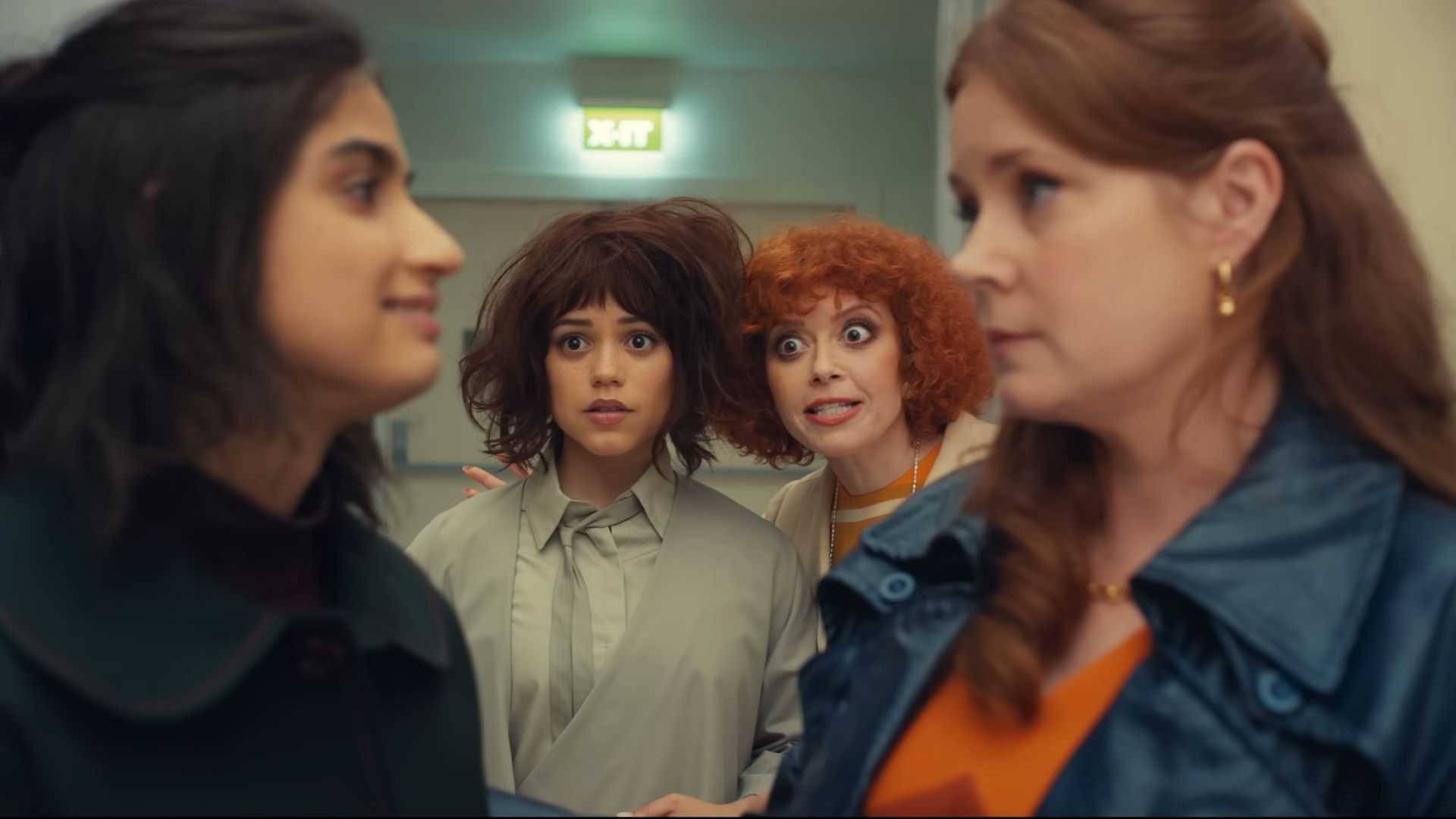
Genuinely disappointing is Amy Adams, in one of her worst performances to date. Chrissie, who functions as the matriarch of a dying family, is forced to suffer in silence. She shoulders the crushing weight of parental trauma alone. You wouldn’t know it from Adams, who plays the part with nothing more than stiff indifference. Contrast this with Ortega, Tharia, and Aran Murphy (Rick), decades younger than Adams, who treat the story’s absurdity with conviction. Ironically, these real-life performances reflect generational division better than film does.
Midway through, Chrissie does something deplorable to Klara, an early sign of how far she’ll go to hold her family together. The film never seems to notice what it has shown. On screen, it’s uncomfortable in execution considering Klara resembles a teenager. It’s more of a reflection on the film’s lack of self-awareness, how it never seems to notice it has just shown a mother harming a child. Instead, the scene moves on as quickly as the moment arrives.
To a lesser extent, but still contradictory, Klara wants to give a machine its proper burial instead of being melted down for parts. So what do the characters do? They blow it up with explosives and watch, satisfied with their work. In more interesting sci-fi movies, these choices would be intentional, but they read as a failed attempt to inject sincerity.
Almost all the emotional beats that should challenge the audience fail because Klara and the Sun dilutes its grief with whimsy. But by the end, the scenes that should pay off in catharsis simply feel numb. Yes, Klara and the Sun is funny. Yes, Klara and the Sun is even cute. Beyond its three young leads, the movie’s flippant approach to its high-concept narrative is so pacifying that its most emotional scenes dry out one’s tear ducts.

- Release Date
-
October 23, 2026
- Runtime
-
116 minutes