Frequently asked questions
What exactly is a cleansing oil?
Cleansing oils are a specific category of cleanser primarily made with oil. Part makeup remover, part face wash, they’re designed to do the heavy lifting of breaking down sunscreen, waterproof makeup, grime, and debris before you go in with a water-based cleanser.
As for how to apply one? Start with dry skin and massage the product thoroughly. To activate them, simply wet your face with a splash of warm water, which helps them emulsify and melt away your makeup. Some people like to wipe off oil cleansers with a washcloth for added gentle exfoliation, but you can also easily rinse them off without one.
Do dermatologists recommend cleansing oils?
In a word: yes. It’s just a matter of finding the right formula for your skin type, just as you would with the rest of your skin care products. “Double cleansing can work for all skin types, including oily skin and dry skin,” says Dr. Chang. “While it may seem counterintuitive, oil cleansing can help balance the skin’s natural oil production. It can also thoroughly clean the pores to avoid clogged pores and acne breakouts.”
Dr. Chang recommends paying attention to your skin type for best results. “For those with acne-prone skin, use oil cleansers that are noncomedogenic to avoid breakouts,” she says. She also suggests oil cleansers for dry skin because they can help “clear out pores without being excessively harsh or irritating.” If you have sensitive skin, choose an option that’s fragrance-free and contains hydrating ingredients. “Those with sensitive skin may want to do test spots of the cleansers, as they should with any new product, to make sure it doesn’t cause any skin reactions,” says Dr. Chang.
How to remove stubborn eye makeup with a cleansing oil
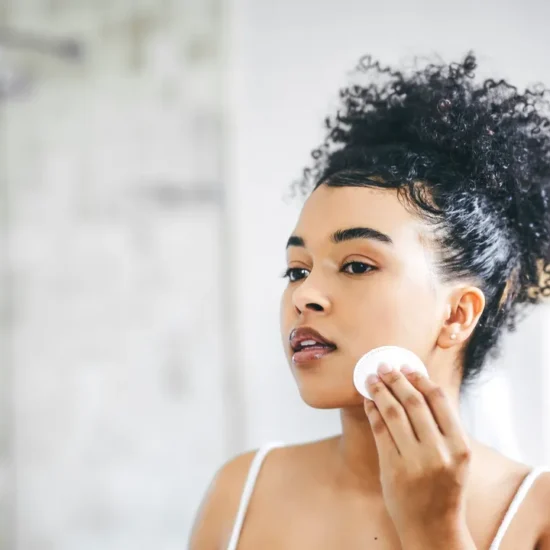
If you’re trying to remove stubborn eye makeup (particularly mascara) with a cleansing oil, Tim Quinn, a celebrity makeup artist and founder of Halo42 Skincare, has some advice to share: “Use a facial cotton pad under the lashes to act as a ‘bib,’” he says. Then, saturate another cotton pad with the cleansing oil and gently press it into the lashes, swiping down to remove the mascara. “This approach is much gentler, which is important since we want to avoid rubbing and irritating the delicate eye area,” he says.
Do cleansing oils clog pores? Can they help with blackheads?
No, as long as you choose a noncomedogenic formula. “Oil cleansers may clog pores if comedogenic oils like coconut oil or butters are used,” says Dr. Chang. “If you’re prone to acne, it is important to choose oil cleansers that are noncomedogenic, such as those with jojoba oil or argan oil.” Dr. Chang also likes formulas with pore-friendly plant oils like grapeseed, rose-hip, and sunflower oils, as well as squalane, for acne-prone skin.
It’s also important to completely wash off the product after using it to remove makeup, according to Dr. Saedi. “The biggest disadvantage is the risk of not cleansing off all of the oils left behind on your skin. The best way to mitigate this is to follow up with a traditional cleanser,” she says. This is where double cleansing comes into play, and why it’s so important. If done correctly, you’ll remove built-up dirt, oil, and sweat, improving the overall appearance and health of your skin.
They can absolutely help with blackheads, as well. Blackheads are made of oxidized sebum (the gunk that builds up in pores), according to Dr. Saedi. “Using an oil-based cleanser that softens the buildup and attracts the oil from your pores will help!”
Are cleansing oils good for antiaging?
If your cleansing oil features ingredients like vitamin C (to brighten), vitamin E (to soften), squalane (to retain moisture), and niacinamide (to color-correct skin tone), such a choice can be great for aging skin types, because it will not only exfoliate and clean the skin, but it’ll also leave behind skin-boosting benefits, according to Rachel Nazarian, MD, board-certified dermatologist at Schweiger Dermatology in NYC. She recommends looking for a cleansing oil with antioxidant properties to help brighten skin tone and soften skin texture.
Removing makeup altogether is also another way to keep your skin looking fresh and resilient. “Leaving makeup and residue can age skin by leaving free radicals that can break down collagen,” she says. So washing these pollutants off with a cleansing oil is a great first step.
How often should you use a cleansing oil?
It’s fine to use a cleansing oil daily. What’s important is making sure you’re using it correctly, says Dr. Saedi. “Typically, a cleansing oil is applied to dry skin and gently massaged in for 30-60 seconds. After that, add water to your fingertips to help emulsify the oil and rinse the face clean,” she says. Next, follow it up with a traditional cleanse to ensure that the face is fully clean without stripping the skin.
What’s the difference between cleansing balm and oil?
“Both cleansing balms and oils work on the same principle—using oils to dissolve makeup, sunscreen, and excess sebum—but they differ mainly in texture,” says Dendy Engelman, MD, a board-certified dermatologist in NYC. Oils are liquids that come right out of the bottle, while a balm is a solid or semisolid that melts into an oil as you massage it into the skin. “Balms can feel a bit richer and are wonderful for drier skin types, or if you enjoy a more indulgent cleansing ritual,” she says.
Are there any disadvantages of cleansing oil?
The only thing to watch out for when using a cleansing oil is making sure you’re thoroughly washing it off. “If you start your regimen by using a cleansing oil but then don’t fully rinse it off, everything else that follows may potentially have an obstacle to absorbing into your skin, which means you’re missing out on its benefits,” says Dr. Nazarian. So it’s very important to make sure you rinse off every trace of it before applying other skin care ingredients.
How we evaluated cleansing oils
Glamour testers evaluated more than a dozen of the most popular cleansing oils by evaluating texture (were they overly greasy or just subtly slippery?), how our skin felt post-cleanse, and whether they removed every bit of makeup. We looked for formulas that were lightweight yet able to sweep up all of our foundation, concealer, mascara, and more, without having to aggressively scrub. We also judged formulas based on how they left our skin feeling, whether it felt stripped or hydrated. Spoiler alert: The following picks did these qualities justice and more.
- Marisa Garshick, MD, board-certified dermatologist and assistant clinical professor of dermatology at Cornell-New York Presbyterian Medical Center
- Claire Chang, MD, board-certified dermatologist at UnionDerm in New York
- Nazanin Saedi, MD, board-certified dermatologist and clinical associate professor at Thomas Jefferson University
- Dendy Engelman, MD, board-certified dermatologist in NYC
- Rachel Nazarian, MD, board-certified dermatologist at Schweiger Dermatology in NYC