
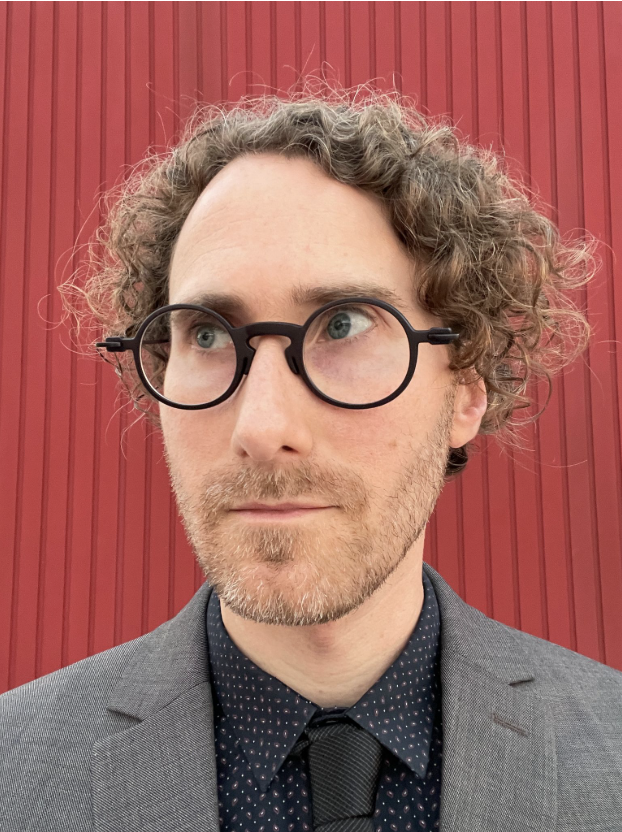
Rémi Grellety is a two-time Oscar-nominated producer whose work has been honored with an Emmy, a Peabody, a César, and a BAFTA. For 15 years, he produced Raoul Peck’s films at Velvet Film (Paris, New York), including I Am Not Your Negro (2016) and the HBO miniseries, Exterminate All the Brutes (2021). He then founded Warboys Films (Paris). In parallel, Grellety has supported emerging filmmakers and produced seven debut documentary films, including A Taste of Whale by Vincent Kelner (2022) and Garland Jeffreys: The King of Between by Claire Jeffreys (2023). His last productions include Soundtrack to a Coup d’Etat by Johan Grimonprez (2024), which won a Special Jury Award for Cinematic Innovation at Sundance (and was recently named one of the greatest documentaries of the 21st century by Documentary magazine, alongside Peck’s 2016 doc), and Closure by Michał Marczak (2026), which also premiered at Sundance and won the main prize at Thessaloniki Documentary Film Festival. Grellety is a member of the Academy of Motion Picture Arts and Sciences, the European Film Academy, and the French Film Academy.
IDA: Could you share a bit about your background and the experiences that shaped who you are as a producer?
RÉMI GRELLETY: I always loved films. As a teenager, I watched a lot of them, and growing up, I thought I might want to work in cinema. I grew up in a rural town in France, with no connection to the movie industry. I had two privileges, though: first, although my parents were worried when I started talking about working in film, they were very supportive; and second, that small town had a one-screen cinema that played the crème de la crème of arthouse cinema. At age 13, I discovered filmmakers such as Elia Suleiman, Michael Moore, Agnès Varda, Raoul Peck, Ken Loach, Sofia Coppola, Barbet Schroeder, Wong Kar-wai, and many others.
I have spent much of my life alongside contemporary artists and filmmakers for whom cinema, art, life, and social commitment are inseparable. Their work showed me that creative practice can be deeply connected to the world around us. I not only recognized myself in that approach, but also found a sense of belonging within it. It has profoundly shaped the way I think about storytelling and the kinds of stories I am drawn to tell.
IDA: When did you begin working in the documentary field, and what initially drew you to pursue it?
RG: Documentary producing came into my life in 2010. By then, I had already worked for several production companies on fiction features and shorts as an assistant to producers. Then I met Raoul Peck, and I worked on the production of a feature film we shot in Haiti. As we were releasing the film, an earthquake struck Haiti, and Raoul immediately decided to go there to help and to film. It became a documentary, and he invited me to produce it with him. So, the first film I ever produced was the documentary feature Fatal Assistance (2013). That experience opened my eyes to a field of creativity that I had only known as an audience member. Since then, although I have continued to produce fiction films, I’ve become increasingly drawn to documentary’s ability to explore new cinematic forms while engaging directly with the world we live in, and I eventually decided to focus on nonfiction.
IDA: You have worked with many of my favorite directors, Raul Peck, Johan Grimonprez, Brett Story, and more, just to name a few. What is it about a project or a director that makes you say yes?
RG: I’ve been fortunate to work with remarkably creative and dedicated directors. One thing the established filmmakers you’ve mentioned have in common is that, despite having already built substantial bodies of work, they continue to take risks and push themselves further, both formally and in how they engage with major issues. I’m excited by that kind of ambition, and I enjoy helping them realize it.
There is no single formula for saying yes, but there is always an intuition that something feels right: the right person with a singular point of view, the right team, a relevant subject, and the right ambition to approach it. I also always ask myself whether I am the right producer for that film, and whether what I can bring will genuinely make a difference. If, deep down, I feel the answer is no, then even if it’s a director I’ve long wanted to work with, I would rather say no. It should always be about serving the project.
IDA: Alongside the major productions, you have consistently made room to produce first-time directors, like Vincent Kelner on A Taste of Whale and Claire Jeffreys on King of In Between. What does that work mean to you?
RG: I have always been—and still am—involved in at least one first-time director’s project because I feel it provides a counterbalance. When you’re going through a large production, with bigger crews, multiple partners, and an established filmmaker, there are a lot of expectations. It’s refreshing to also work with someone who brings something entirely new. Those projects often have a freedom and urgency that are difficult to reproduce later. Producing first films also keeps me learning; they challenge my own habits. Lastly, and importantly, it’s a way of giving back to an industry that has given me a great deal. I benefited from people who trusted me when I had no track record.
One of the first-time filmmakers I’m currently working with is Stephanie Andreou. Her project, Women Walk Home, is an exciting film that blends a forgotten chapter of Cyprus’s history with a deeply personal perspective, offering a reflection on history, memory, and the intergenerational legacy of social and political struggles.
IDA: Tell us about Warboys Films, your production company based in France. What inspired you to start the company?
RG: I work in a variety of setups: as a lead producer, a minority coproducer, an executive producer in Europe and in the US, because I feel this particular moment requires a great deal of flexibility. Having my own company meant having the freedom to make my own decisions, raise financing, and hold rights in order to build value that can be reinvested in future projects. I can therefore produce both established filmmakers and first-time directors.
The company is also home to producer Sara Skrodzka, who is currently producing her first feature as producer, When The Fire Sleeps by Eri Mizutani. Most recently, we also co-produced Kristof Bilsen’s The Apologist, which premiered at Sheffield DocFest.
As for the company name, I couldn’t decide. At the time, I was reading Virginia Woolf’s teenage diaries. Across those entries, you can actually see her move from keeping a regular diary to developing a more literary voice, with narration and structure, while still writing about everyday life. At that point, her family was spending the summer in a village in England called Warboys.
IDA: One of your recent films, Closure, had its world premiere at Sundance and went on to win the Golden Alexander at Thessaloniki before screening at True/False and DC/DOX. Michał Marczak has said meeting you at the Thessaloniki pitching forum helped shape the project. What did the film need at that stage, and how did it change from that first pitch to the film that premiered?
RG: I knew Michał’s previous films and was already a big fan. My producing partner, Sara Skrodzka, is from Poland, and my husband is Polish too, so I was — I guess! — naturally drawn to explore that cinema, which has such a rich history and extraordinary creativity and craftsmanship. So, when we heard Michał’s pitch, it was a no-brainer. Michał already had a very clear vision of the film. My role was to bring structure, creative dialogue, and ambition. It was about protecting the project’s vision while giving it enough structure to move quickly as events unfolded, finding the right funding partners, and ensuring that a film rooted in such a specific story set in Poland could speak to audiences around the world.
The film came together incredibly fast: only fourteen months passed between Michał meeting Daniel, the protagonist, and the world premiere at Sundance. That was possible thanks to Michał’s determination, dedication, and unique craftsmanship, as well as the remarkable production team we assembled: Monika Braid, Katarzyna Szczerba, Karolina Marczak, and Sara Skrodzka. That collaboration was truly special, and I really cherish the experience—not forgetting our wonderful editor, Anna Garnarczyk, and our fantastic sound team.
IDA: Between Closure’s festival run and your other producing commitments, what are you working on right now that you can talk about?
RG: Closure is at that particular stage where it’s screening at festivals around the world while also selling to different territories, so I’m still very much involved with it on a daily basis. The major production currently underway is Petra Costa’s next film. I’ve wanted to work with Petra ever since we first met six years ago, so I feel very fortunate.
IDA: Looking further out, is there a type of story, or a filmmaker, you haven’t worked with yet that you are hoping to?
RG: I’m hoping to work again with some of the amazing filmmakers I’ve already collaborated with, while continuing to encounter inspiring directors who surprise me, even if they come from places or disciplines I know little about—as well as filmmakers determined to reinvent themselves. Most of all, I want to keep making distinctive films that will hopefully remain relevant, both in what they express and in the way they do so. I want to keep making art that speaks to audiences around the world. I want to keep trusting documentary filmmaking as a uniquely powerful medium, and to keep trusting audiences to embrace ever more daring films.