
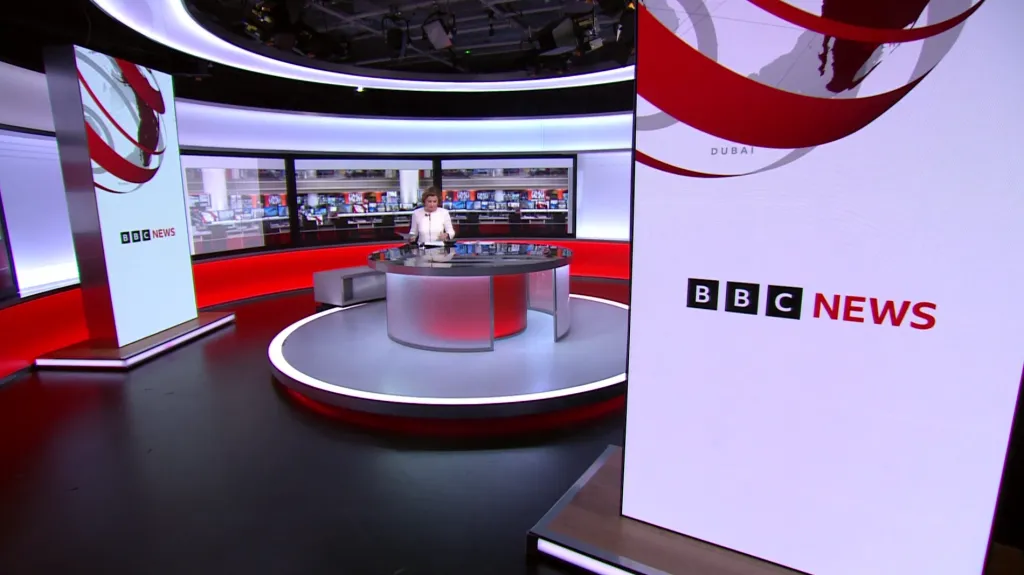
BBC News has announced a detailed package of content cuts after director-general Matt Brittin warned earlier on Wednesday that savings measures would involve “tough choices.”
In an email to the newsroom, acting BBC News CEO Jonathan Munro told journalists that shows including Radio 4’s The World Tonight, a 56-year-old institution, are going to be canceled.
BBC News is also not replacing Amol Rajan as a presenter on Radio 4’s Today, one of the biggest news shows in the UK. This reduces the show’s roster of permanent hosts from five to four.
Chief presenter and on-screen editor roles are also under review, meaning some of BBC News’ highest-profile faces could have their jobs closed.
The cuts announced by BBC News today are worth around £25M ($33.5M), which is less than half its savings target of £51M by next April. It means another round of cuts is expected in the coming months. One insider described it as a “grim” day.
The BBC News savings are the division’s contribution to the BBC’s overall plan to slash costs by £500M ($670M) over the next three years, building on an existing target of £1.5B.
Other shows being canceled include Radio 4’s Midnight News and Money Box Live. BBC Breakfast will no longer broadcast on a Sunday morning from September, while 5 Live Weekend Breakfast will become a two-hour show.
Behind-the-scenes changes are also planned, including merging the production teams of Sunday with Laura Kuenssberg and Newsnight.
“Change of this scale is never easy, and we recognise the personal impact it can have. We are committed to supporting everyone through this period as fully as we can,” Munro said.
“We have had to make some very tough choices. But they are considered choices – made carefully and collectively – with a clear focus on aligning our resources to our audiences.”
The savings measures add to the uncertainty at BBC News, which remains without a permanent leader eight months after Deborah Turness quit amid a scandal over a botched Donald Trump edit.
Insiders have been speculating for months over who could succeed Turness, with frontrunners said to include Channel 4 News editor Esme Wren and Louisa Compton, Channel 4’s head of news and current affairs. An official recruitment process has yet to begin.
Between 1,800 and 2,000 roles will be laid off across the BBC in the coming months, contributing to a sense of gloom among the workforce.
The BBC will open a voluntary redundancy scheme to avoid compulsory layoffs, but the cuts represent roughly one in 10 members of staff across the BBC’s licence fee-funded and commercial operations.
The bigger picture is that 94% of the UK population use the BBC every month, but fewer than 80% pay the £180 annual licence fee.
The BBC is attempting to bridge this gap as part of negotiations with the government over a new royal charter, which is effectively the corporation’s operating agreement for the coming years.