
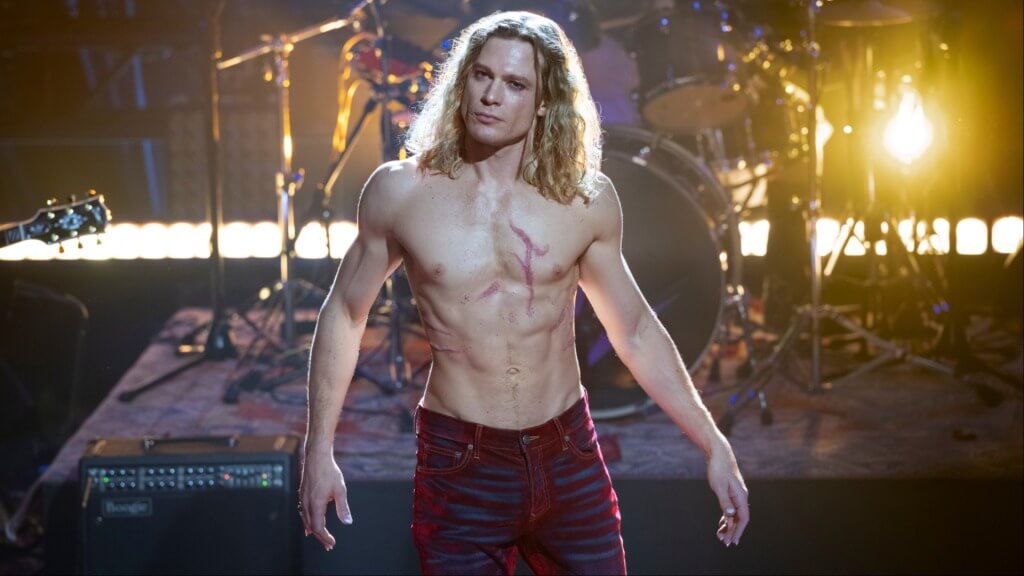
The Lestat we meet in season one of Interview With The Vampire is already a performer: An accomplished pianist, a commedia dell’arte harlequin, an opera connoisseur whose perfectionism leads him to murder a subpar tenor. For fans of the Vampire Chronicles novels, these moments offered a tantalizing tease of how the show would adapt The Vampire Lestat, where he embarks on a career as a rock star. For composer Daniel Hart, who penned a more traditional score for the first two seasons, this creative pivot presented a fascinating new challenge.
“The most important thing we needed to discover was the sound of the music that Lestat wanted to make, because that was going to drive us throughout the entire season,” Hart tells The A.V. Club. “It was going to comment on things that were happening in episodes, plot points, and it was going to delve through Lestat’s past, especially lyrically, since Lestat was going to be the one writing the lyrics.”
Actor Sam Reid prepared extensively for this point in Lestat’s journey, working with a vocal trainer and learning to play piano. That all culminated in a live concert in New York ahead of the season premiere, performed in-character as an act of promotional kayfabe. Lestat’s North American tour then provides the framing device for this season, traveling with an entourage including Daniel Molloy (Eric Bogosian), who is filming a documentary about Lestat’s rise to fame.
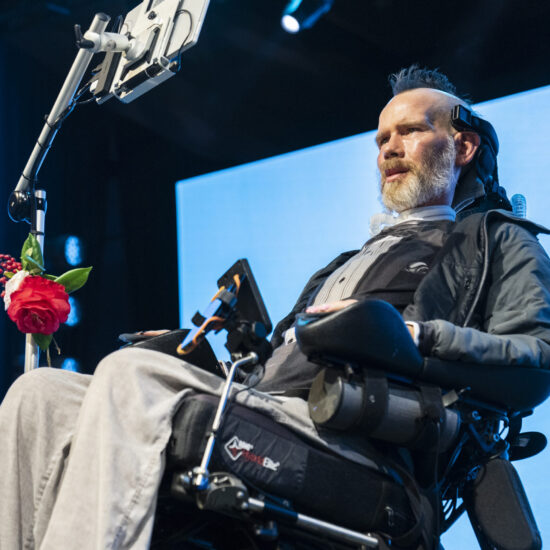
Known for his collaborations with director David Lowery on films like The Green Knight and Mother Mary (another project about a fictional pop star, this time with songs by Charli XCX and Jack Antonoff), Hart has also toured and recorded with artists including St. Vincent and Broken Social Scene. When the time came to start work on The Vampire Lestat, those experiences were “pretty much the first thing that we discussed at the writer’s room table.” The writing team demanded juicy anecdotes, but Hart had to talk them down: “Touring is very grueling. It’s just a job, and yeah, there’s some partying, people do crazy stuff and do lots of drugs, but that wasn’t me. It was a job for me.”
His pragmatic outlook did not translate to Lestat’s story, which definitely leans more toward the sex and drugs side of things. Swapping one unreliable narrator for another, season three sees Lestat use music as a chaotic, exhibitionist form of self-expression. His songs function as a companion piece to Daniel Molloy’s in-universe book Interview With The Vampire, which explores the life and undeath of Lestat’s ex-lover Louis. By striking back in such a public way and revealing his identity to the mortal world, Lestat has violated a cardinal law of vampire culture—although some humans still seem to think his undead shtick is just a gimmick.
“I can only draw on my own experience when I’m writing music,” says Hart. “I try to write music that’s very personal, so I tried to adapt the things about music that are important to me, and overlay it on the things about music that are important to Lestat.”
Lestat’s choice of genre is appropriately anachronistic for a guy whose influences span three centuries. Daniel Hart and showrunner Rolin Jones have cited numerous references including David Bowie, INXS, Kurt Cobain, and Chappell Roan, but above all, The Vampire Lestat’s sound is straightforward rock. This season’s credits song, “All Fall Down,” resembles a cross between T. Rex and a lost track from The Rocky Horror Picture Show.
“We talked about it a lot in the writer’s room,” says Hart. “Rolin asked me if I thought rock and roll was dead, and I said I think it’s not dead, but headed for a deep sleep, maybe.”
The original Vampire Lestat novel came out in 1985, and in theory, the show could’ve updated it with a more modern style of music. But Hart argues that rock felt “right on target” for their version of Lestat, who embraces the rockstar lifestyle complete with groupies, drug binges, and a VH1-style film crew documenting his spiraling mental health. Lestat isn’t a millennial artist trying to emulate Iggy Pop’s self-aggrandizing stage presence. He’s “like a 60- or 70-year-old who maybe listened to Woodstock albums when they came out.”