
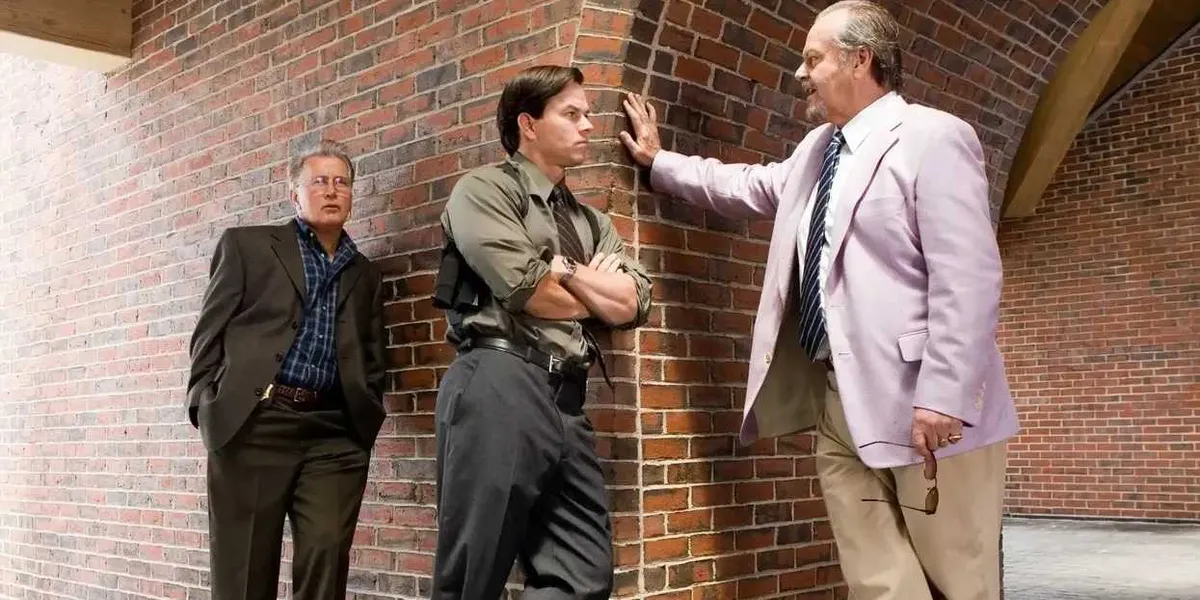
Martin Scorsese’s The Departed came out when I was in high school, and I don’t think I was mature enough to understand the first time I watched it how much it was about tension and identity.
But the older I get, the more I love how it establishes a brilliant thesis statement that sets the tone for the next two and a half hours right from the opening voiceover.
To me, it’s one of the best-written stories I’ve seen.
William Monahan’s Oscar-winning screenplay wastes absolutely no time telling you exactly what kind of world you’re in as Jack Nicholson’s Frank Costello monologues.
Let’s break down the exact screenwriting techniques you can emulate to write a killer opening for your own spec script.
– YouTubewww.youtube.com
The Opening Line That Flips the Genre
The film opens with archival footage of the 1960s Boston desegregation busing riots, and that immediately establishes a real-world backdrop of structural breakdown and societal anger. We can see there’s a level of chaos in the city.
Then, Nicholson’s iconic, raspy voice cuts through the audio mix.
“I don’t want to be a product of my environment. I want my environment to be a product of me.”
Think about how most crime films operate. Usually, the protagonist or the antagonist justifies their criminal lifestyle by blaming their surroundings.
This goes back to the classic gangster films, where we had to show someone was a public enemy or see them killed at the end and justice served.
But this is a modern crime film, so it can flip that sentiment on its head.
Costello frames his criminality not as a survival mechanism, but as an act of absolute, terrifying willpower.
That chaos you see? That’s him. He’s the one calling the shots and driving the animosity. This is who he is through and through.
On a script-writing level, this instantly tells the audience that this character isn’t just a local mob boss; he views himself as God.
‘The Departed’ CREDIT: Warner Bros. Pictures
Highlighting the Mechanism of Corruption
As the monologue continues, Scorsese cuts to a young Colin Sullivan sitting at a diner counter. Costello enters, shrouded heavily in shadow, and begins grooming the boy. He hands him comic books, some cash, and pats his head.
“Years ago they had the Church. That was only a way of saying – we had each other. The Knights of Columbus were real head-breakers; true story. They took care of their own. But 20 years ago you could get to be a cop in Boston. If you wanted to do that, it was a good life. But what we had was inside. This is the cost of doing business.”
Now we get a progression of power where Costello is shown to bridge the gap between traditional pillars of community.
He’s got both the church and the cops in his pockets.
And if you want to determine your own fate, you have to do it with him on your side.
When he delivers the crucial phrase, “This is the cost of doing business,” it strips away any romanticized, Godfather-esque notions of “honor” or “family” in organized crime.
This guy runs a very cold corporation.
Summing It All Up
Opening a movie with a voiceover can sometimes feel like an info-dump, but when it’s used to establish a thesis on how power actually operates in your world, it grabs the audience by the throat.
And then it never lets them go until the end of the movie.
Let me know what you think in the comments below.