

We know you probably aren’t just running outside, picking up a camera, and shooting a big action or sports sequence. You’re probably planning fight choreography and lighting and stunts, and your prep work is extending to your cinematography, too.
What’s one easy way to heighten your action sequences?
The DP Journey has some advice for us.
– YouTube www.youtube.com
What Is the 180-Degree Shutter Rule?
If you’ve spent any time studying cinematography, the 180-degree shutter rule is probably already familiar to you.
The 180-degree shutter rule establishes that your shutter speed should be double your frame rate. So if you’re shooting at 24fps, you’re setting your shutter to 1/48 or 1/50. The result is motion blur that looks natural to the human eye.
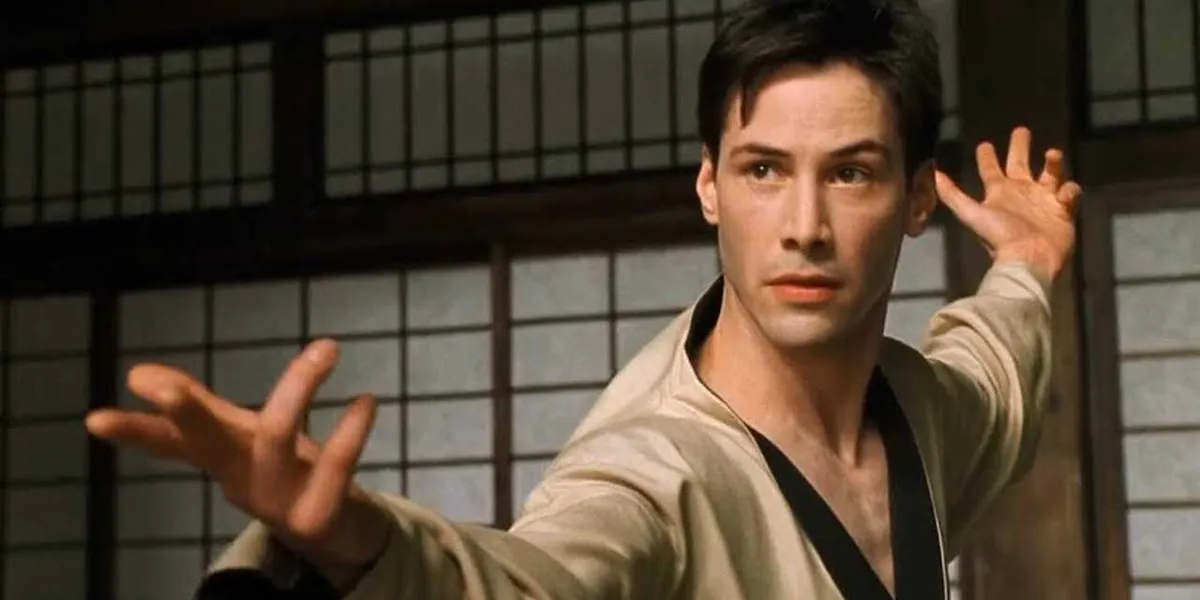
But what if breaking that rule on purpose is what your action scene needs? That’s what the DP Journey digs into in their video, using the training sequence from The Matrix as the example.
Quick note before we go further. We’re talking about shutter angle here, not the 180-degree line rule, meaning the one about camera placement and maintaining consistent screen direction when filming a scene. (On set, you’ll hear crew talking about “crossing the line” when referring to this rule.)
The term “shutter angle” dates back to the earliest film cameras. The shutter, which controlled how much light hit the film (exposure time), could at one point only be opened to a maximum of 180 degrees. A more open shutter leads to longer exposure time and more motion blur.
Two different things that share a number. Easy to mix up, but know the difference.
What Is Shutter Drag?
The resulting visual blur is called shutter drag. Push your shutter angle past 180 degrees, and you get more motion blur than your audience expects, which translates to a heightened sense of speed and energy.
Most cameras let you set this directly as a shutter angle. If your camera only offers shutter speed rather than shutter angle, experiment with settings slower than double your frame rate.
The DP Journey shoots the demonstration on a GH7 cranked all the way to 357 degrees, adds a subtle slider move, and some camera shake, and the result reads as kinetic.
Why the 180-Degree Rule Isn’t the Law
As we’ve already mentioned, the 180-degree shutter rule came from mechanical film cameras, where the physical shutter disc maxed out at a half-rotation before it had to advance the film. Digital cameras obviously don’t have that constraint, so we can push things now.
Going the other direction on angle is equally instructive. In Saving Private Ryan, cinematographer Janusz Kaminski used a mix of different shutter angles.
“We shot a lot of the film with the camera shutter set at 45 or 90 degrees,” he told American Cinematographer. “The 45-degree shutter was especially effective while filming explosions. When the sand is blasted into the air, you can see every particle, almost every grain, coming down. That idea was born out of our tests, and it created a definite sense of reality and urgency.”
He did a lot of things that produced sharper, choppier frames and that now-iconic war movie look.
The point is that shutter angle is a creative decision, not a technical must or default. We’ve got a full breakdown of how to think about shutter angle if you want to go deeper, and five ways to use shutter speed creatively if you’re looking for more practical applications.
– YouTube www.youtube.com
What The Matrix Can Teach You
The DP Journey points out something in that same Matrix sequence. There’s a stylized strobing, echoing hand effect that the Wachowskis layered on top by the end of the scene.
Shutter drag is the foundation, with a VFX echo effect layered on top, two tools working together to signal that Neo is no longer operating at a human speed. (He’s the One.) The cinematography/VFX decisions support the story, just as Kaminski’s choices did in his war film.
So, go experiment on your next action or sports scene.