
Raindance Seven: 7 Ways to Prep for Cannes So It Actually Changes Your Career
Seven is a useful number. Not because it’s neat—but because it forces choices. Cannes doesn’t reward effort. It rewards clarity. These seven are the difference between “I went to Cannes” and “Cannes moved my career forward.”
1. Decide Why You’re Going (Or Don’t Go)
Most filmmakers go to Cannes Film Festival for the wrong reason:
Because they can.
That’s not a strategy. That’s tourism with a badge.
Pick one objective:
- Sell a film
- Raise finance
- Build a network
- Position your next project
If you can’t define success in one sentence, Cannes will define failure for you.
2. Build a Hit List, Not a Hope List
“Let’s see who I bump into” is how amateurs justify doing nothing.
Professionals:
- Identify 20–30 specific people
- Know what those people want
- Understand how they fit into their own plan
Cannes is not random.
It’s engineered proximity.
3. Learn How to Network (Properly)
Here’s the uncomfortable truth:Most filmmakers don’t know how to talk to other humans without pitching.
That’s why the Power of Networking class exists.
Because real networking is:
- Asking better questions
- Listening longer than you speak
- Making people feel seen—not targeted
You’re not collecting contacts.
You’re building a reputation.
And reputation travels faster than your film ever will.
4. Your Pitch Is a Weapon, Not a Monologue
Nobody cares about your 120-page screenplay on the Croisette.
They care about clarity.
If you can’t answer this in 30 seconds:
- What is it?
- Who is it for?
- Why will it sell?
Then you don’t have a pitch.
You have a hobby.
5. Pre-Book Half Your Meetings
Cannes is chaos for the unprepared.
For everyone else, it’s scheduled chaos.
Before you arrive:
- Lock in 30–50% of your meetings
- Use introductions, not cold emails where possible
- Treat your calendar like currency
Because time at Cannes is the most expensive thing you’ll never pay for.
6. The Raindance Villa Party Is the Real Market
Here’s what nobody puts on the brochure:
The Croisette is theatre.
The villas are where decisions begin.
Private gatherings matter because:
- Fewer people
- Better conversations
- Real access
But access isn’t granted to the needy.
It’s granted to the interesting.
If your only value is “I have a project,” you’re invisible.
If your value is “I understand the business and bring something to the table,” you get invited back.
check out the Raindnace Villa Party here
7. The Festival Starts After You Leave
The biggest lie about Cannes:
That it happens in May.
It doesn’t. It happens in the follow-up.
Within 72 hours:
- Send precise, human emails
- Reference specifics
- Move the conversation forward
Because without follow-up, Cannes is just an expensive memory.
Final Shot
Cannes is not about discovery.
It’s about acceleration.
If you’re unclear, it amplifies confusion.
If you’re prepared, it multiplies opportunity.
Most filmmakers arrive hoping something will happen.
The ones who win?
They arrive already in motion.
Want access to the rooms where deals actually start?
Take the Power of Networking class and learn how to turn one conversation into five, and five into a career.
And if you’re in Cannes join us at our 12th annual Villa Party.
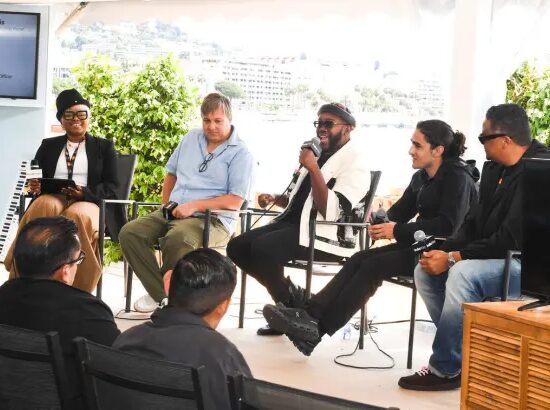
Photo Credit: Bertie Watson
I founded Raindance Film Festival in 1993 because the British film industry was closed, polite, and congratulating itself while shutting new filmmakers out.
I co-founded the British Independent Film Awards in 1998 because British indie film deserved more than a shrug, a pat on the head, and a Tuesday night screening.
Raindance didn’t start as a brand.It started as a rebellion — film training without gatekeepers, a festival without permission, and a community built by filmmakers who weren’t waiting to be invited in.
Later, we took it global — Toronto, Vancouver, New York, LA, Berlin, Brussels — because independent film doesn’t belong to one city, one class, or one accent.
I’ve produced 700+ short films and seven features, including Deadly Virtues (2014) and ALICE, which won the SXSW Grand Jury Prize (2019) not because someone “discovered” us, but because the work earned its place.
I’ve written three books used by filmmakers worldwide because too many courses taught compliance instead of survival.
In 2009, I was awarded a PhD for services to film education, ironic, given that most of my career has been about tearing down the rules that education insisted you follow.
I don’t believe in waiting for permission.I believe in making work, building systems, and forcing the industry to catch up.
Specialties: Independent Film (the real kind) · Producing · Writing · Film Education · Festivals · Breaking Broken Systems
Check out my new Substack for in depth Free Articles:
Related