Last Updated:
Nakhrewaalii review: Ansh Duggal and Pragati Srivastava impress in a warm, chaotic rom-com about love, gender stereotypes and mistaken identities.




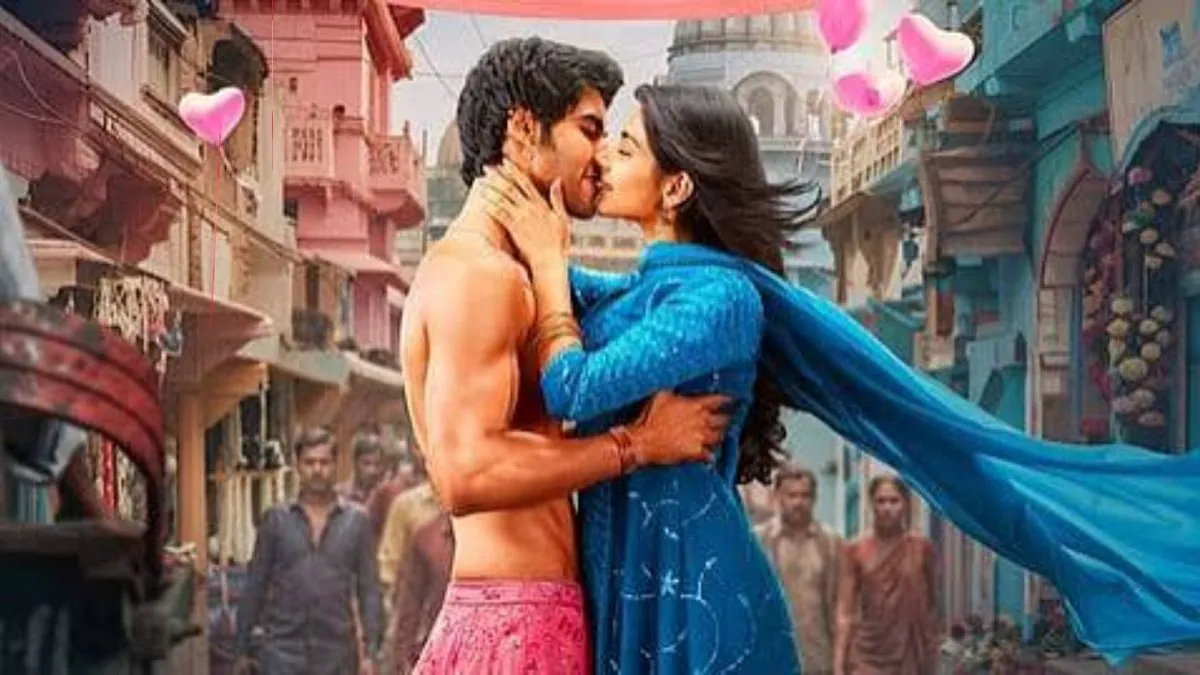
Ansh Duggal as Sumit and Pragati Srivastava as Paridhi in Nakhrewaalii.
NakhrewaaliiA
3/5
Starring: Ansh Duggal, Pragati Srivastava, Akash Makhija, Gopal Dutt, Kanupriya Shankar Pandit, Aayushi Verma, Kumud Mishra, Brijendra Kala, Rana Pratap SinghDirector: Rahul ShanklyaMusic: Tanishk Bagchi, Vayu, Gaurav Chatterji, Vaibhav Pani
Nakhrewaalii Movie Review: There is a recognisable temperament to films bearing Aanand L Rai’s imprimatur. From Tanu Weds Manu to Raanjhanaa, his productions frequently inhabit worlds where eccentric people, small-town idiosyncrasies, romantic recklessness and an unmistakable earthiness coexist without appearing manicured for the camera. The characters often carry the perfume of the places they come from, complete with provincial prejudices, verbal flourishes and endearing imperfections. Rahul Shanklya’s Nakhrewaalii belongs unmistakably to that lineage. Marking the big-screen Hindi debut of Ansh Duggal and Pragati Srivastava, the film fashions a sweet, rambunctious romantic comedy around a small-town man convinced that women have it easier than men, until Delhi, love and circumstances conspire to make him experience the other side of that argument rather literally. What follows involves him cross-dressing as a woman while navigating romance, social expectations and the increasingly muddled grammar of modern relationships. Loosely based on Satya Vyas’ bestselling novel Dilli Darbar and adapted by Divy Nidhi Sharma, the film has plenty of heart and an infectious conviviality despite occasionally surrendering to conspicuous clichés. More importantly, underneath its froth lies a pointed observation about a particular strain of grievance harboured by Indian men.
Sumit Mishra, played by Ansh Duggal, hails from Hardoi in Uttar Pradesh and has an unusual childhood memory attached to dressing up as a girl. As a child, he would occasionally disguise himself to sneak into female-only puja ceremonies and score some free prasad. Years later, the same trick returns under considerably more dramatic circumstances when he dresses as a woman to elope with his girlfriend Sweety, only to get caught in the process.
At the police station, Sumit suffers an even greater humiliation. Under pressure from her parents, Sweety outright denies being in love with him and instead alleges that Sumit forced her to elope. The betrayal leaves him shattered, although the film milks his predicament for deliciously comic despair. Adding salt to an already spectacular wound, Sweety gets married the very next day.
Bruised in love but hardly chastened in spirit, Sumit relocates to Delhi with his friend and faithful sidekick Jagat Singh, played by Akash Makhija. He arrives carrying dreams of better career prospects, a bag brimming with condoms and the gleeful expectation that Delhi will introduce him to sophisticated, modern women who wear “scanty skirts” during summer and “leather boots” in winter.
It is the imagination of a quintessential small-town boy projected upon a supposedly progressive metropolis. Sumit and Jagat rent accommodation in Delhi from Batuk, played by Gopal Dutt, and his wife Rekha, played by Kanupriya Shankar Pandit. The couple are themselves preoccupied with an important domestic mission: finding the perfect husband for their daughter Paridhi, played by Pragati Srivastava, who holds a government job. Their fixation with securing a gazetted officer as a son-in-law becomes one of the film’s recurring comic pleasures.
Living under the same roof, complete with a sprawling courtyard and an open terrace, Sumit and Paridhi inevitably cross paths. Sparks arrive almost instantaneously. Their chemistry has an enjoyable restlessness, built through flirtation, arguments and the sort of conversational sparring where attraction hides conveniently behind irritation.
During one of their early conversations, Sumit launches into an impassioned sermon about how easy women supposedly have it in India. According to him, women receive preferential treatment on public transport, whether buses or the Metro, laws are disproportionately sympathetic towards them, and society generally affords them privileges men never receive. Men, in his estimation, have been handed the more arduous end of existence.
Paridhi does not waste much time dismantling the theory verbally. Instead, she challenges him to live as a woman in Delhi for one day and discover for himself precisely how easy it supposedly is.
Meanwhile, Sumit’s pursuit of the glamorous Delhi woman he had envisioned before arriving in the city leads him to Mihika, played by Aayushi Verma, a Delhi University student from an affluent family who is nevertheless grounded and approachable. She is almost uncannily similar to the fantasy Sumit had manufactured in his head. He tries wooing Mihika at college while returning home and missing virtually no opportunity to flirt with Paridhi.
Eventually, certain ahem circumstances place Sumit at an uncomfortable romantic crossroads, forcing him to confront whether his feelings genuinely belong to Mihika or Paridhi. When clarity finally dawns and he realises that it is Paridhi his heart actually yearns for, another obstacle arrives in the formidable shape of Batuk.
Batuk lays down an unequivocal condition. Sumit must secure a government job within a month, produce his salary slip and only then will he be considered worthy of marrying Paridhi.
Thus begins the film’s central masquerade. In his determination to win Paridhi, whose family remains adamant about marrying her to a stable government officer, and while attempting to disentangle the increasingly knotted expectations surrounding romance and respectability, Sumit adopts a female persona named Sumita.
What follows is an escalating carousel of confusion.
Sumit now has to juggle two identities while navigating contradictory romantic expectations, complications surrounding Mihika and, most inconveniently, her father Rai Jaichand, played by Kumud Mishra. Rai Jaichand eventually becomes Sumita’s boss and, in another delicious complication, falls head over heels for her.
How Sumit keeps his two personalities afloat without watching them spectacularly collide, and what inhabiting Sumita teaches him about the daily experiences of men and women, forms the film’s hilarious, occasionally preposterous and unexpectedly perceptive core.
From the outset, watching Ansh Duggal and Pragati Srivastava together might induce a mild sense of déjà vu. Their flirtatious persiflage, brisk mannerisms and combustible chemistry occasionally evoke Bittu and Shruti from Band Baaja Baaraat. Yet, the pairing never feels like mere imitation. Duggal and Srivastava bring enough freshness and contrast to their equation to make Sumit and Paridhi immediately likeable in their own right.
Importantly, Sumit is not written as an outright misogynist or an irredeemable sexist. His prejudices are considerably more mundane, which arguably makes them more recognisable. He carries assumptions about women that have been absorbed so casually that he barely recognises them as prejudice.
One sequence involving Mihika encapsulates this mindset particularly well. She invites Sumit home, shares a glass of wine with him, wears a bikini while swimming and even kisses him. Sumit immediately interprets these gestures as confirmation that she wants to sleep with him on their very first date.
It is symptomatic of how he has approached women and relationships until this point. Sumit tends to perceive women primarily through the prism of sexual possibility and physical gratification rather than pausing to converse with them, understand their desires or wonder what might actually be going through their minds. Anything sexual that happens to him subsequently becomes an anecdote to parade proudly before Jagat.
This is precisely why his transformation into Sumita carries more significance than the familiar comic conceit of putting a man in women’s clothes. Once Sumit begins navigating Delhi as a woman, he is forced to encounter several indignities, presumptions and inconveniences that women negotiate routinely. His earlier certainty begins developing fissures because experience proves considerably harder to dismiss than argument.
The screenplay is peppered with ludicrous and gleefully absurd situations, particularly in the second half when the comedy of errors shifts into full throttle. Much of that lunacy owes its effectiveness to the supporting ensemble.
Kumud Mishra’s Rai Jaichand is particularly delightful. He cannot resist peppering practically every conversation with Urdu shayari, carries an abiding affection for Ghalib and Faiz, and gradually becomes hopelessly enamoured with Sumita. The incongruity alone is enough to provoke laughter, but Mishra’s commitment gives the character an additional flourish.
Then there is Akash Makhija’s Jagat Singh, the hero’s best friend and sidekick, a character archetype Hindi cinema has revisited countless times. Yet Makhija approaches Jagat with enough individuality to prevent him from becoming generic comic furniture. There are discernible shades of Deepak Dobriyal’s Pappi from Tanu Weds Manu and Mohammed Zeeshan Ayyub’s Murari from Raanjhanaa, but this confluence of familiar characteristics, tempered by Makhija’s own comic instinct, turns Jagat into one of the film’s most enjoyable personalities.
The music complements the breeziness reasonably well, with tracks such as “Yeh Bawla Hai” and “Kona” standing out.
For all its conviviality, however, Nakhrewaalii begins losing some of its grip as it approaches the finishing line. The climax feels half-baked and disappointingly perfunctory, particularly considering how confidently the film has spent much of its runtime constructing its romantic and social complications.
Certain sequences are bereft of nuance, and although the film wants its commentary to slip unobtrusively beneath the comedy, there are occasions when the message is delivered with considerably less delicacy than intended. Subtlety sometimes leaves the room precisely when the screenplay needs it most.
The greater disappointment is the manner in which Sumit and Paridhi’s crackling chemistry gets short-changed during the second half. Having invested so successfully in their repartee and attraction earlier, the film increasingly prioritises the mechanics of its comedy over the romantic equation at its centre. The laughs keep arriving, but the romance that initially gave them emotional ballast receives less room to breathe.
The subject itself makes comparisons with Ayushmann Khurrana’s Dream Girl and Dream Girl 2 practically inevitable. The cross-gender impersonation, mistaken attraction and escalating complications occupy familiar comedic territory, and Nakhrewaalii does occasionally walk close enough to those films for the resemblance to become conspicuous.
On the performance front, both Ansh Duggal and Pragati Srivastava make impressive debuts. Their natural screen presence and seemingly effortless chemistry give the film much of its buoyancy. Duggal deserves particular credit for inhabiting Sumit’s cross-dressing avatar with finesse and personality instead of reducing Sumita to a shrill caricature. The performance understands that the disguise is funnier when there is a recognisable person underneath it.
Gopal Dutt as Batuk turns in yet another immensely enjoyable performance, occasionally bringing that unmistakable TVF flavour to his scenes without allowing it to overwhelm the character. Aayushi Verma is equally winsome as Mihika and makes an impression despite operating within a crowded narrative. Brijendra Kala, appearing as the invigilator, reliably extracts humour from his presence, while Kanupriya Shankar Pandit as Rekha and Rana Pratap Singh as Tiwari are among the other performers who lend the film’s colourful world additional texture.
Nakhrewaalii ultimately works best when it allows its silliness and social curiosity to occupy the same room without one strangling the other. Beneath the wigs, mistaken identities, amorous bosses, government-job obsession and romantic bedlam sits a young man who begins the film convinced that he already understands women and ends up discovering how embarrassingly incomplete that understanding was. Rahul Shanklya’s film may stumble when its comedy becomes louder than its romance and its message occasionally loses finesse, but its congenial ensemble, lived-in humour and the easy electricity between Ansh Duggal and Pragati Srivastava keep it afloat. It is not a reinvention of the small-town Hindi rom-com, but it carries enough warmth, mischief and self-awareness to remind you why this particular flavour of cinema, when seasoned properly, can still be enormously appetising.
Quick Answers
 Ask News18
Directed by Rahul Shanklya, Nakhrewaalii marks the Hindi film debuts of Ansh Duggal and Pragati Srivastava. The story is loosely based on Satya Vyas’ bestselling novel Dilli Darbar and follows a small-town man from Hardoi who cross-dresses as a woman named Sumita to win over the woman he loves.
Ask News18About the Author

Yatamanyu Narain is a Sub-Editor at News18.com with a passion for all things entertainment. Whether he\’s breaking the latest Bollywood news or chatting with rising stars in the OTT world, he’s always…Read More
October 30, 2026, 15:26 IST