Last Updated:
Gajab Raat Review: Manoj Bajpayee leads Ritesh Shah’s slick Delhi thriller packed with corruption, conspiracy, dry wit and a strong ensemble cast.




Manoj Bajpayee leads Ritesh Shah’s nocturnal thriller Gajab Raat.
Gajab Raat U/A
4/5
Starring: Manoj Bajpayee, Nushrratt Bharuccha, Meghna Agarwal, Divya Dutta, Akshay Oberoi, Shraddha Das, Dhiru Bhojwani, Satyen Chaturvedi, Alok Pandey, Kiku Sharda, Leena SharmaDirector: Ritesh ShahPlatform: Netflix
Gajab Raat Movie Review: We have been craving a Neeraj Pandey-esque thriller for quite some time, the kind that hooks you with a deceptively simple premise and then keeps tightening the screws with every new revelation. That is precisely the experience Ritesh Shah’s latest directorial Gajab Raat, formerly titled Ghooskhor Pandat, manages to serve. Produced by Neeraj Pandey himself, the film is a deliciously slippery mystery thriller that unfolds over the course of a single night, as a crooked police officer finds himself trapped in a bureaucratic tug-of-war set in motion after an unidentified young woman is dumped on the roads of Delhi, bloodied and grievously injured. Shouldered by Manoj Bajpayee, Nushrratt Bharuccha, Meghna Agarwal, Divya Dutta, Akshay Oberoi and others, the film is brisk, crafty, sporadically funny and consistently entertaining.
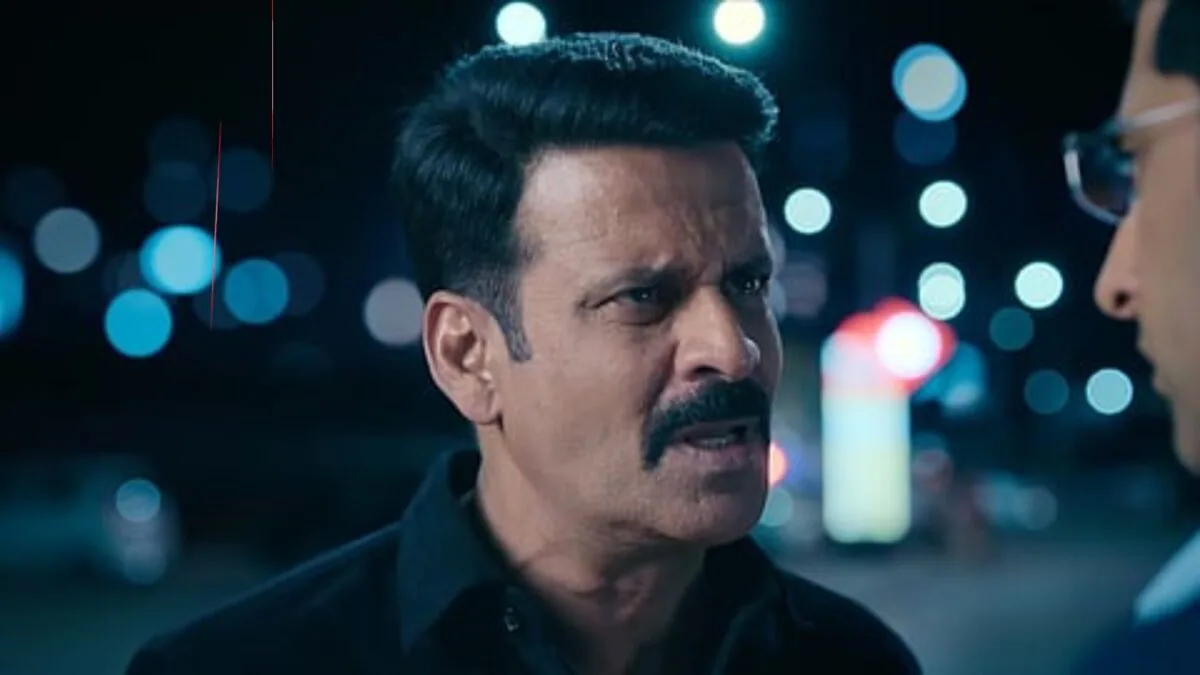
The story takes place almost entirely over the course of one night. It begins with a hotel raid in the heart of Delhi’s Connaught Place, spearheaded by Ajay Nirvit, played by Manoj Bajpayee, a notorious and corrupt cop whom the Delhi Police refers to as “Chameleon.” His career has been a chequered catalogue of suspensions, demotions and questionable conduct. And yes, he is also allegedly a womaniser.
The night takes a darker turn when the film cuts to a sedated woman lying in the backseat of a car with a man sitting beside her. As the vehicle glides furtively through the near-empty roads of Delhi in the middle of the night, the woman briefly regains consciousness, opens the door and tumbles out of the moving car.
Before the man and the other occupants can retrieve her, a swarm of people suddenly pours out from a nearby movie screening. Seeing the woman soaked in blood and barely clinging to life, the crowd gathers around her. Phones come out almost instinctively. Pictures are clicked, videos are recorded and within minutes the footage begins circulating across social media. The incident goes viral across the country, forcing the Delhi Police into immediate damage-control mode.
Nirvit, having just stepped out of the hotel raid, receives a call from his equally corrupt superior and long-time partner in crime back at the police station. He asks Ajay to head to the spot where the woman fell from the car and casually points out that this case might be the opportunity Nirvit needs to finally earn enough money to buy the house he has been coveting in Surajkund.
At the scene, Ajay escorts the barely breathing and brutally injured woman to the hospital and begins trying to establish her identity. Around the same time, social worker Neha Prabhu, played by Shraddha Das, arrives and insists on being part of the investigation.
And if two competing interests were not enough, a third player enters the fray. Naveen Madhok, played by Akshay Oberoi, arrives claiming to be from the CBI. He is the very man who had been sitting beside the woman moments before she fell from the moving vehicle. Madhok tells Nirvit that the injured woman is a Russian named Natalia Wadogova and claims that she is a mole connected to a drug lord. He demands that Ajay surrender the case to him.
Ajay, stubborn to a fault and perhaps instinctively suspicious of anyone trying to wrest control away from him, refuses.
The rest of Gajab Raat grows out of this deceptively compact premise, following an officer with a distinctly questionable moral compass as he attempts to unravel a conspiracy buried beneath layers of institutional rot. Whether Nirvit eventually chooses self-preservation, profit or the right thing is something the film leaves for the viewer to discover.
Interestingly, Ritesh Shah borrows several recognisable cinematic signatures from the Neeraj Pandey universe and folds them into the narrative without turning the film into mere mimicry. There is the bureaucratic gamesmanship, the morally fungible officers, the rapid movement between institutions, the dry wit tucked inside tense situations and the sense that almost everyone knows a little more than they are willing to reveal. Shah blends these familiar ingredients with his own sensibility, giving an otherwise conventional mystery a distinct personality without draining it of substance.
Visually too, Gajab Raat is an accomplished affair. Several sequences are beautifully mounted, and despite much of the film unfolding after sundown, the frames remain lucid and evenly lit. It sounds like an elementary virtue, but it matters enormously in a genre where “dark” cinematography often becomes literal darkness and forces viewers to squint at the screen in the name of atmosphere. Here, the nocturnal palette enhances the intrigue without obscuring what is happening.
One sequence in particular leaves an impression right at the beginning, during the hotel raid. The camera follows the characters through the location in what feels almost like an extended point-of-view passage, allowing us to move through the chaos alongside them rather than merely watch it from a safe distance. The film has several such moments where cinematography adds a playful visual wrinkle to the proceedings and keeps an otherwise dialogue-heavy story kinetically alive.
The screenplay itself has been handled with almost surgical neatness. Even when it brushes against familiar clichés, the presentation keeps the viewer invested because the film rarely lets a scene sit still long enough to become stale. Information is parcelled out with care, conversations frequently carry ulterior motives and each new development subtly alters our understanding of the people involved.
The dialogues are another considerable strength. They are crisp, acerbic and often laced with humour at precisely the moments when the mounting tension could have become oppressive. This sporadic comedy offers breathing room without puncturing the thriller’s atmosphere. It also feels organic to the characters rather than grafted onto them merely to solicit laughs.
More importantly, Gajab Raat is populated by people whose ethics are rarely arranged into convenient boxes. These are men and women willing to bend rules, twist procedure and compromise themselves for the right price, yet somewhere beneath the grease of corruption, a moral compass continues to twitch. The film is interested in that contradiction. How crooked can someone become before the instinct to do the right thing disappears altogether?
Ajay Nirvit embodies that contradiction most effectively. He is hardly the sort of protagonist one would instinctively entrust with justice, yet the film constantly nudges him towards circumstances that demand precisely that from him.
The twists themselves may not always be startling in conception. Some can even be anticipated if one has consumed enough bureaucratic thrillers. Yet they are deployed with wit and enough narrative agility to accentuate the experience rather than merely function as surprise buttons. The film is less interested in repeatedly pulling the rug from underneath you and more invested in showing just how many people are standing on the same rotten floor.
That brings us to another of its more compelling concerns: the bureaucracy itself. Gajab Raat exposes the mould growing inside systems that are often more concerned with preserving institutional reputation than pursuing truth. Officers barter influence, agencies guard territory, information becomes currency and the possibility of scandal immediately triggers an elaborate machinery of containment. The conspiracy may propel the plot, but the system surrounding it provides the film with its more cynical sting.
On the performance front, Manoj Bajpayee, as always, delivers a nuanced turn as Ajay Nirvit. He has played cops countless times over the years, but there is enough specificity in his approach here to keep the character from feeling recycled. He inhabits Nirvit’s crookedness and corruption with the same dexterity with which he reveals his compassionate and vulnerable side. A sly glance, a tired pause or a sudden shift in his voice is often enough to tell you which version of Ajay has entered the room.
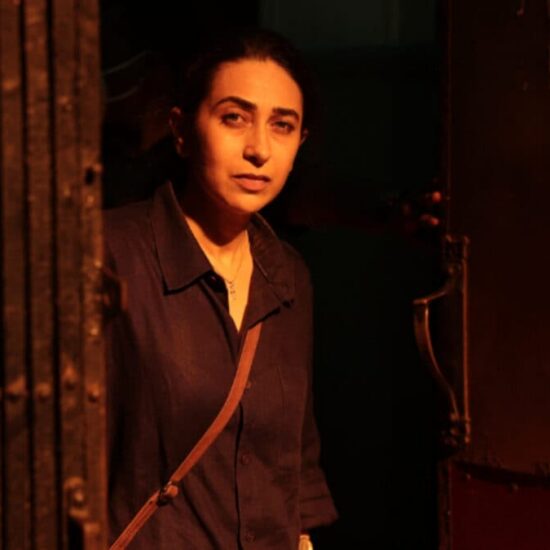
Another performance that stands out is Nushrratt Bharuccha as Rosie, an escort caught during the hotel raid whom Ajay lets off on the condition that he can meet her later in the night. Interestingly, Rosie has no real connection to the primary mystery, yet her conversations with Ajay become some of the film’s most enjoyable detours. Their banter is sharp, irreverent and genuinely funny, and Bharuccha plays the part with admirable looseness and comic instinct. She understands exactly how much to give a character who exists outside the central conspiracy without allowing Rosie to feel extraneous.
Divya Dutta too deserves a special mention for once again stepping into a character markedly different from what one might expect of her and making it entirely her own. Shraddha Das, Meghna Agarwal, Dhiru Bhojwani, Satyen Chaturvedi, Akshay Oberoi, Alok Pandey, Kiku Sharda, Leena Sharma and the rest of the ensemble fit seamlessly into their respective parts. Each brings a distinct rhythm to the film, lending its bureaucrats, fixers, officers and peripheral players a convincing sense of lived-in authenticity.
In the end, Gajab Raat understands that a good thriller does not always need an earth-shattering conspiracy. Sometimes it simply needs a murky night, one injured stranger, a handful of compromised people and enough competing interests to make the truth feel like contraband. Ritesh Shah turns Delhi after dark into a maze of flickering streetlights, institutional vanity and opportunistic morality, while Manoj Bajpayee gives the film its wonderfully crooked compass. Not every twist will blindside you, nor is every turn unprecedented, but the film knows how to keep the machinery humming. By the time dawn threatens to arrive, Gajab Raat has made its point rather effectively- in a system where almost everyone has a price, the real mystery is not who is corrupt, but who still remembers where to draw the line.
Quick Answers
 Ask News18
Manoj Bajpayee’s crime thriller Gajab Raat premiered and began streaming on Netflix on Friday, October 23, 2026.
Ask News18About the Author

Yatamanyu Narain is a Sub-Editor at News18.com with a passion for all things entertainment. Whether he\’s breaking the latest Bollywood news or chatting with rising stars in the OTT world, he’s always…Read More
October 23, 2026, 16:17 IST