
EXCLUSIVE: In the spring of 2024, we reported on a buzzy young filmmaker named Wesley Wang — a Harvard student who got a feature take on his short nothing, except everything. set up at TriStar in a competitive situation, with Darren Aronofsky producing. The project isn’t moving forward at Sony, but we can now tell you that Wang is making more big moves.
Wang today announces the launch of Wesley Wang Media, a creator-led entertainment company working in film & TV that will fund original, serializable IP outright and release it across social platforms including YouTube.
Projects on WWM’s slate include , a multi-part true-crime series using a found-footage aesthetic and an interactive, cross-platform mystery. The six-installment project will invite audiences to decode bodycam footage, surveillance logs and digital interfaces, with a $100,000 bounty for the first resolution. Principal photography is slated for December.
Secondly, there’s The Algorithm, a high-concept scripted thriller to be produced by podcaster-creators Colin & Samir, using a digital-first format with 15- to 18-minute episodes. Other projects in development include a prequel series and feature film based on the Tribeca-winning Violet and Marlowe, Industry Plant, Last to Leave, and Response, a greenlighted horror short to be directed by Jason Rodelo, with a feature version being developed in parallel.
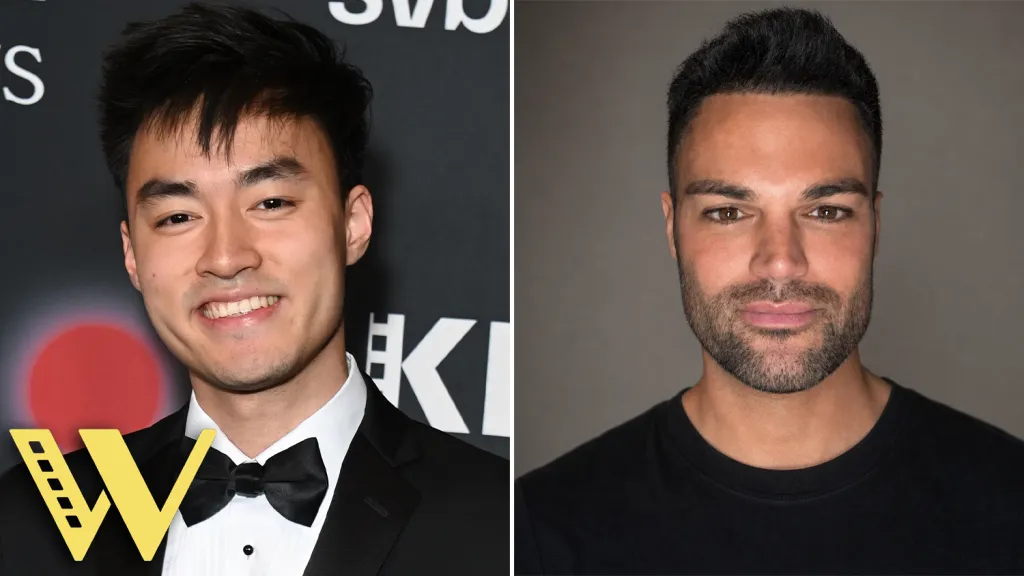
Wang’s right hand at Wesley Wang Media is Caellum Allan, who joins as Head of Film & Television from Sony’s TriStar Pictures. In his new role, he’ll oversee the company’s scripted slate, creative development strategy, and filmmaker partnerships across scripted programming, immersive narrative experiences, and feature-length productions.
At the heart of Wang’s vision for WWM is a model where the public dictates which stories are worth further exploration. The model is designed to run the traditional studio system in reverse: test work in public first, then invest more deeply in the concepts that resonate. Projects that demonstrate demand online will be scaled into features, series, franchises, brand partnerships, and live experiences, with WWM owning a piece of every breakout it backs.
Wang’s concept for his company stems from personal experiences he speaks to with refreshing candor. The emerging filmmaker wrote and directed nothing, except everything in his senior year of high school and paid for it by teaching chess lessons and cold-emailing 200 producers off IMDb Pro until one of them said yes. A full year of festival submissions went nowhere, and in September 2023, he decided to see what happened in posting the short to YouTube. It popped online, with over a million views in 10 days and 9.5M+ lifetime, and quickly captured studio interest, with four studios bidding on feature rights. Sony’s TriStar won, Aronofsky’s Protozoa came on to produce, and Wang, then 19 and studying economics at Harvard, was attached to write and direct, making him one of the youngest filmmakers ever to set up a feature at a major studio, alongside Backrooms‘ Kane Parsons.
The year and a half that followed taught Wang much more than the deal itself: He had signed rights to the short away, and with them, the ability to make the film the way he had made everything else. Notes arrived asking for changes he did not believe in, every revision climbed a chain of approvals, and weeks passed before he heard anything back. He had reached millions of people directly, without anyone’s permission, and then handed over the right to reach them again. In August 2025, he and Sony agreed to part ways, and early this year, with a fire in his belly, Wang left Harvard to build the studio he wished had existed when he was 17.
Seemingly, Aronofsky saw the writing on the wall early when it came to Wang — seeing in him the potential to break out as one of the hottest young directors of a digital-native generation. And Wang now hopes to deliver in the vein of Curry Barker with Obsession, who got to his $750,000-budgeted debut off of YouTube shoots, sold it to Focus for around $15M, and captured the biggest worldwide gross in the history of Focus Features. He cites Backrooms‘ Parsons, Talk to Me‘s Danny and Michael Philippou, and The Amazing Digital Circus as other big inspirations — talents that were validated in public before an executive was involved, only to then be paid a premium by studios for something they had no hand in creating, or to come in house.
Another project, reflecting Wang’s mission, is a competition series — a new take on Project Greenlight — that will award $100,000 to a digital-native filmmaker to make their dream movie. Anyone can apply: There’s no requirement of a film degree, agent, reel, prior credits, or anything else. WWM will co-own the ultimate project alongside the filmmaker. Applications are now open at this link.
Caellum Allan’s appointment at WWM marks a reunion with Wang, with whom he intersected as the champion of Wang’s breakout short film nothing, except everything at TriStar.
“Caellum and I have had a great creative relationship from the beginning,” Wang told Deadline. “He understood what I was trying to do before there was an obvious roadmap for it, and I’ve always trusted his taste, instincts and ability to see the bigger opportunity in a filmmaker’s work. We share an ambition to make projects that are creatively bold, commercially exciting and capable of reaching a real audience. I couldn’t imagine a better partner to help build this slate.”
Allan brings more than a decade of experience developing commercially driven films across the studio and streaming landscape. As an exec at TriStar, he worked on a slate that included Labyrinth, with Robert Eggers attached to direct; an adaptation of Paulo Coelho’s The Alchemist; and the studio’s adaptation of Guys and Dolls. Previously, he was a creative executive within Netflix’s Original Film division. His credits also include Thanksgiving, Roald Dahl’s Matilda the Musical, I Wanna Dance with Somebody and The Boys in the Band.
Allan has built a reputation for identifying distinctive international filmmakers and helping introduce them to the American studio system following his involvement with acquiring the first U.S. projects from directors including Michiel Blanchart, Kirill Sokolov and Yeon Sang-ho, who’ve subsequently gone on to direct major English-language productions.
“Everyone wants to find the next great filmmaker; far fewer are prepared to take the first meaningful risk on one,” Allan said. “What drew me to Wesley Wang Media is the belief that the next generation of filmmakers shouldn’t have to wait for permission. They should have the opportunity to make ambitious work, build an audience and let the work create its own momentum.”
Wang is represented by WME and 3 Arts Entertainment.