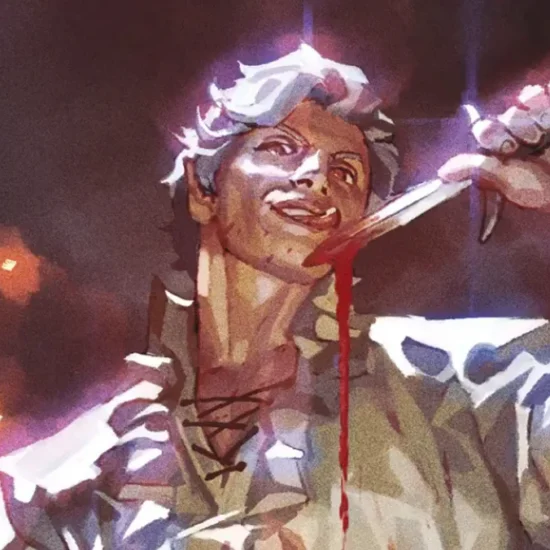

Ever since beginning his unparalleled career with The Duellists in 1977, Ridley Scott hasn’t been afraid to immerse viewers in the grueling horrors of war. Whether it’s the Roman army in Gladiator, the Crusades in Kingdom of Heaven, the French Revolution in Napoleon, or fighting the war on terror in Body of Lies, Scott fundamentally understands how inherently dramatic international conflicts can be. The filmmaker uses his technical mastery to deliver some of the most visceral big-screen skirmishes.
Although G.I. Jane is vastly underrated, Scott’s star-studded 2001 war epic Black Hawk Down, based on the harrowing true story that took place in October 1993 during the Battle of Mogadishu, is certainly Scott’s greatest war movie this side of Gladiator. Thanks to its unrelenting action meant to plunge viewers into the hellish, unforgiving battlefield, every war film buff and Scott follower needs to revisit Black Hawk Down as it turns 25 this December.
‘Black Hawk Down’ Drops Viewers Into Battle With Unflinching Realism

Based on Mark Bowden’s 1999 journalistic account, Black Hawk Down: A Story of Modern War, Ridley Scott’s acclaimed adaptation transports viewers to Mogadishu, Somalia, in 1992 to 1993. The story follows an elite U.S. military mission to capture and extract Somali militia leader Mohamed Farrah Aidid, who has gone rogue during the nation’s civil war and declared himself president. The U.S. sends the joint Task Force Ranger platoons to retrieve Aidid in Somalia. The soldiers are met with spirited resistance that results in a deadly stalemate and prolonged firefight that takes down two American Black Hawk helicopters and prompts a dogged rescue mission.
Black Hawk Down is uncompromising in its relentlessly punishing, brutally violent battle scenes; Scott takes no prisoners and spares no one in his expertly crafted war epic. Rather than trivializing war for entertainment purposes, Scott makes us empathize with the gallant heroic sacrifices required for the soldiers to locate the downed helicopters, rescue their fellow endangered soldiers, and return them to safety. It’s worth noting that the massive ensemble cast led by Ewan McGregor, Josh Hartnett, Eric Bana, and Tom Hardy in his film debut leaves little room for expansive character development. Still, the immense stakes of the real-life mission underscore the dire urgency of the rescue efforts. Scott’s masterful direction mirrors this admirably.
Part of the unwavering, documentary-like verisimilitude derives from Scott’s insistence on shooting on location in Kenitra, Morocco, a country where Scott also filmed Gladiator. The city provided a more ideal urban landscape than Amman, Jordan, which was initially considered but deemed too inland.
Another aspect of the movie’s unremitting realism comes from the Oscar-winning sound and editing. Beyond the visual bombardment of sniper fire along with grenade rocket launchers, helicopter gunships, and nocturnal strafing guns, the flash-bang cutting and aural blitzes build to a full sensory assault that approximates the numbing brutality of war better than any movie other than other beloved war movies such as Come and See or the opening sequence of Saving Private Ryan.
‘Black Hawk Down’ Redefined Modern Warfare Strategies

Black Hawk Down’s greatest legacy is that it marked a radical shift in the tactical military strategy used by the U.S. during perilous international conflicts. Rather than a traditional boots-on-the-ground actioner that needlessly risks the lives of infantry soldiers, the movie depicts the elite Special Forces and Delta Force using more efficient aerial combat, night-vision invasions, and other remote means of intervention that mitigate said risks. Looking back, we can trace the evolution of the military approach in Black Hawk Down to modern-day drone warfare movies like Land of Bad, Good Kill, and Eye in the Sky.
In addition to winning two Oscars, Scott earned a Best Director nomination for Black Hawk Down. The movie received critical acclaim as well, including a 4/4-star review from Roger Ebert and a 77% approval on Rotten Tomatoes. Although the movie cost roughly $92 million to make, it nearly doubled its budget at the box office, grossing $173 million worldwide. 25 years later, Ridley Scott’s all-time great war epic hasn’t lost an ounce of its gritty potency and remains one of the most frenetic and dynamic movies of its ilk.